社会民生
华盛顿特区可能再次取消小费抵扣政策。此次,最低工资标准将为25美元。
中文译文
2022年,华盛顿特区的选民决定取消该地区的小费工资抵免制度——这一制度允许企业为餐厅服务员及其他靠小费谋生的员工支付较低的时薪,再由小费来弥补差额。这项名为第82号提案的投票措施获得了超过70%的支持率,并承诺逐步提高服务员的最低工资,直至与其所在地区的传统最低工资标准持平。
随之而来的是该地区出现了一系列严重的经济问题,这促使市议会于去年部分废除了第82号提案。如今,一年多后,反对华盛顿特区小费工资抵免制度的运动再度兴起。
餐饮业长期以来一直采用小费工资制度。因此,只要服务员的小费能够弥补工资差额,法律上允许他们获得低于传统法定最低工资的标准工资。(如果小费无法弥补差额,雇主必须予以补足。)在第82号倡议被废除时,根据华盛顿特区的法律,服务员每小时可获得5.35美元的工资,小费则用于弥补这一金额与传统的16.10美元最低工资标准之间的差距。(由于通货膨胀调整,华盛顿特区的现行最低工资为18.40美元。)第82号倡议试图彻底改变这一制度,通过完全取消小费抵扣机制,要求该地区的服务员在2027年前获得全额的法定最低工资。
随后发生的情况实在令人遗憾且在意料之中。第82号倡议通过后,华盛顿特区的全服务酒吧和餐厅岗位减少了5%,由于餐厅缩短营业时间并裁减员工,工人的收入减少了1100多万美元。在同一时期,弗吉尼亚州和马里兰州周边县的岗位减少幅度不到1%,这为衡量华盛顿特区取消小费抵扣机制所带来的负面影响提供了对比依据。与此同时,许多华盛顿特区的……各商家开始在账单上添加“服务费”——有时也被称为“自动小费”——从而大幅提高用餐成本。许多在华盛顿特区的领小费员工也站出来反对这项法律。
面对这一局面,华盛顿特区市长穆里尔·鲍泽呼吁彻底废除第82号提案;而华盛顿特区议会最终决定部分撤销该提案。这其实是个老故事。2018年,华盛顿特区的选民通过了第77号提案,该提案同样旨在取消小费抵扣制度。仅仅几个月后,议会就彻底废除了它。
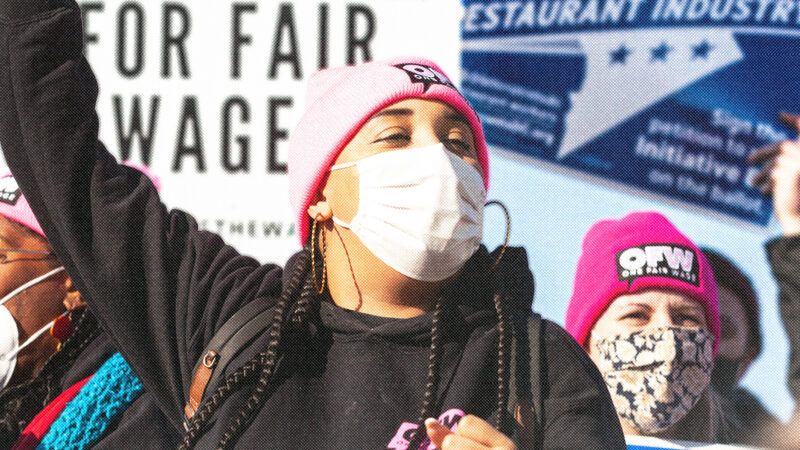
然而,就在人们以为华盛顿特区反对小费抵扣制度的斗争即将结束时,这一斗争又重新兴起。现在出现了第87号提案,该提案不仅旨在到2029年将特区的最低工资提高到25美元,还计划到2031年逐步取消小费抵扣制度。该提案的支持者已向华盛顿特区选举委员会提交所需签名,很可能将于2027年4月在全特区范围内就此提案进行投票。这一推动行动由总部位于纽约的“公平工资组织”牵头,该组织在过去几年里一直在美国各地开展运动,试图废除小费抵扣政策。与华盛顿特区的情况类似,这一努力也遭遇了经济方面的阻力。该组织在芝加哥推动的相关举措导致餐厅提高价格并缩短员工工作时间,这使得芝加哥市议会——一个并非以财政保守著称的机构——决定暂时暂停废除小费抵扣政策的进程。
尽管有如此明显的负面结果,仍有理由认为第87号提案在华盛顿特区能够得以保留,与其之前的提案不同。这是因为华盛顿特区新当选的市长简妮丝·刘易斯·乔治表示支持取消小费工资抵扣政策——这使她有别于鲍瑟——但同时她也对将最低工资提高到25美元的做法持保留态度。
在华盛顿特区废除小费工资抵扣政策的问题上,不幸的是,第三次尝试或许才会成功。
原文
In 2022, voters in Washington, D.C., opted to eliminate the District's tip wage credit—which allows businesses to pay restaurant servers and other tipped employees a lower hourly base that they supplement with gratuities. Known as Initiative 82, the ballot measure passed with over 70 percent support and promised to gradually raise the minimum wage for waiters until it matched D.C.'s traditional minimum wage.
On cue, the District suffered a host of deleterious economic consequences, prompting the city council to partially repeal Initiative 82 last year. Now, just over a year later, the campaign against D.C.'s tip credit is back.
The restaurant industry has long operated under a tipped-wage structure. As such, servers are legally allowed to receive a minimum wage below that of the traditional statutory minimum—so long as their tips make up the difference. (If they don't, the employer must rectify that.)
At the time of Initiative 82's repeal, waiters could be paid $5.35 an hour under D.C. law, with their tips making up the gap between that and the traditional $16.10 minimum. (D.C.'s minimum wage now sits at $18.40, due to inflation adjustments.) Initiative 82 sought to upend this structure by repealing the tip credit altogether and requiring servers in the district to be paid the full traditional statutory wage by 2027.
What happened next was sadly predictable. After Initiative 82's passage, full-service bar and restaurant jobs declined by 5 percent in D.C., while worker earnings fell by over $11 million as restaurants cut hours and staff. Surrounding counties in Virginia and Maryland endured declines of less than 1 percent during this same timeframe, providing a ready counterfactual by which to measure the negative impact of D.C.'s tip credit elimination. At the same time, many D.C. establishments began to add "service fees"—sometimes known as "auto-gratuity"—onto bills, thereby raising the cost of dining by a significant margin. Many D.C. tipped employees themselves have come out against the law.
In the face of this fallout, D.C. Mayor Muriel Bowser called for the full repeal of Initiative 82; the D.C. Council ultimately settled on a partial reversal. This was a familiar story. In 2018, D.C. voters passed Initiative 77, which likewise sought to end the tip credit. Just a few months later, the council repealed it in full.
But just when it appeared that D.C.'s campaign against the tip credit was finally expiring, it sprang back to life. Now comes Initiative 87, which not only seeks to raise the District's minimum wage to $25 by 2029 but would also phase out the tip credit by 2031. Supporters of the initiative have delivered the requisite signatures to the D.C. Board of Elections, likely teeing up the initiative for an April 2027 District-wide vote.
The push is spearheaded by a New York–based organization known as One Fair Wage, which over the past few years has orchestrated a campaign to eliminate the tip credit in cities across America. As in D.C., this general effort has run into economic headwinds. A One Fair Wage effort in Chicago saw restaurants raise prices and cut staff hours, leading Chicago's City Council—a body not exactly known for fiscally conservative politics—to approve a temporary freeze on the tip credit's elimination.
Despite this clear negative track record, there's reason to think that Initiative 87 may survive in D.C., unlike its predecessor initiatives. That's because D.C. Mayor-elect Janeese Lewis George has voiced support for scrapping the tip wage credit—distinguishing her from Bowser—even while expressing reservations about a top-line minimum wage increase to $25.
When it comes to eliminating the tip wage credit in D.C., the third time, unfortunately, may be the charm.