财经市场
世宗大学医疗设备初创企业获得970万美元新投资
中文译文
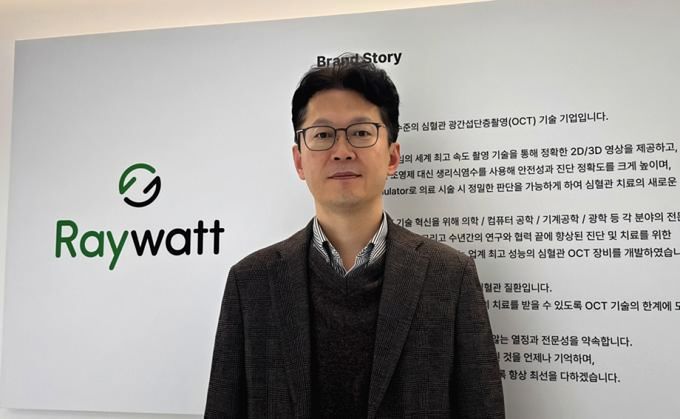
由世宗大学一位教授创立的医疗设备初创企业Raywatt在新一轮融资中获得了130亿韩元(970万美元)的资金支持,其累计融资额已超过235亿韩元。
该大学人工智能融合电子工程系的教授何进永于2019年创立了这家公司。该公司专注于用于心血管和脑血管诊断的医疗成像设备。
参与投资的机构包括InterVest、Life Asset Management、Ryukyung PSG Asset Management、Hyundai Venture Investment、L&S Venture Capital、Eugene Investment & Securities以及EcoPro Partners。
投资者们认可Raywatt在韩国及海外将自身技术实现商业化的成就。该公司的技术已在首尔Severance心血管医院的100多例临床病例中得到应用,同时还被公共采购服务局认定为创新原型产品。Raywatt已在越南获得市场批准,并赢得了阿拉伯联合酋长国政府医院的采购项目。
其旗舰产品FASTER OCT是一种光学相干断层扫描(OCT)系统,该系统能以每秒400转的速度旋转血管内导管,同时以每秒400帧的速度实时捕捉血管的高分辨率横截面图像。
该系统拥有全球最快的图像采集速度之一。此外,它还使用生理盐水而非传统造影剂来生成图像,从而降低患者出现不良反应的风险。
FASTER OCT目前正处于美国食品药品监督管理局(FDA)上市前通知审批的最后审核阶段。一旦获得FDA的批准,Raywatt计划加快进入全球医疗设备市场的步伐。该公司表示,新获得的资金将用于在获得美国食品药品监督管理局批准后建立全球供应链、开发下一代产品,并进一步提升大规模生产能力。借助这笔投资,Raywatt计划加快海外扩张,并争取在2028年在KOSDAQ市场进行基于技术的特殊上市。Raywatt的创始人兼首席执行官何表示:“这项投资体现了投资者对我们在临床应用、监管审批以及海外市场拓展方面所取得成就的认可。”他补充道:“在获得美国食品药品监督管理局批准后,我们计划加快全球产品供应,并开发包括脑血管OCT系统在内的下一代产品。”他还表示希望将Raywatt打造成心血管和脑血管成像诊断领域的全球领导者。该大学表示,最新一轮融资凸显出在大学实验室中开发的原创技术如何能够推动医疗设备的商业化,并助力企业拓展海外市场。在初创阶段,该公司利用世宗大学的教师创业支持计划及研究基础设施来推进技术发展与商业化进程,目前仍与该校在产学合作项目上保持紧密协作。Raywatt在最近于加利福尼亚州圣地亚哥举行的2026年经导管心血管治疗(TCT)会议上展示了其技术实力,该会议是专注于心血管介入治疗的国际顶级盛会。在会议期间,该公司为其FASTER OCT系统获得了订单,并与全球多家医疗设备制造商探讨了潜在的合作机会,这进一步推动了其在海外市场的拓展。
原文
Raywatt, a medical device startup founded by a Sejong University professor, has raised 13 billion won ($9.7 million) in a new funding round, bringing its cumulative funding to more than 23.5 billion won.
Ha Jin-yong, a professor in the university’s Department of AI Convergence Electronics Engineering, launched the company in 2019. It specializes in medical imaging devices for cardiovascular and cerebrovascular diagnosis.
The investors included participation from InterVest, Life Asset Management, Ryukyung PSG Asset Management, Hyundai Venture Investment, L&S Venture Capital, Eugene Investment & Securities and EcoPro Partners.
Investors recognized Raywatt’s achievements in commercializing its technology both in Korea and overseas.
The company’s technology has been used in more than 100 clinical cases at Severance Cardiovascular Hospital in Seoul. It has also been designated an innovative prototype product by the Public Procurement Service.
Raywatt obtained marketing approval in Vietnam and won a tender for government hospitals in the United Arab Emirates.
Its flagship product, FASTER OCT, is an optical coherence tomography (OCT) system that rotates an intravascular catheter at 400 revolutions per second and captures high-resolution cross-sectional images of blood vessels in real time at 400 frames per second.
The system offers one of the world's fastest image acquisition rates. It also reduces the risk of adverse reactions in patients by using saline solution instead of conventional contrast agents to obtain images.
FASTER OCT is currently undergoing final-stage review for premarket notification clearance from the U.S. Food and Drug Administration (FDA). Upon receiving FDA clearance, Raywatt plans to accelerate its entry into the global medical device market.
The company said the newly secured funding will be used to establish a global supply network following FDA clearance, develop next-generation products and further enhance mass-production capabilities.
Building on the investment, Raywatt plans to accelerate its overseas expansion and pursue a technology-based special listing on the KOSDAQ in 2028.
“This investment reflects investors’ recognition of our achievements in clinical applications, regulatory approvals and overseas market expansion,” said Ha, Raywatt’s founder and CEO.
“With FDA clearance, we plan to accelerate global product supply and develop next-generation products, including cerebrovascular OCT systems,” he added.
He said he hopes to position Raywatt as a global leader in cardiovascular and cerebrovascular imaging diagnostics.
The university said the latest funding round highlights how original technology developed in a university laboratory can lead to the commercialization of medical devices and expansion into overseas markets.
In its early stages, the company leveraged Sejong University’s faculty startup support program and research infrastructure to advance technology development and commercialization. It continues to collaborate with the university on industry-academic projects.
Raywatt showcased its technological capabilities at the 2026 Transcatheter Cardiovascular Therapeutics (TCT) conference, a leading international gathering focused on cardiovascular interventions, held recently in San Diego, California.
During the conference, the company secured orders for its FASTER OCT system and discussed potential partnerships with global medical device manufacturers, marking another step toward expanding its overseas presence.