科技
QCon旧金山2026:通过协调人类力量实现技术扩展
中文译文
在2026年旧金山QCon大会上,Netflix的首席安全工程师Scott Behrens介绍了如何让普通员工与工程师共同制定并统一全公司的技术战略。他以Netflix在扩展内部AI智能体方面的经验为依据,指出能够将众人凝聚在一起的策略,其产生的影响力往往比任何工程师单独编写的代码都要更大。
Behrens解释说,这项工作的启动源于多个各自拥有不同发展方向的产品战略开始面临相似的技术风险。由于缺乏统一的技术战略作为支撑,各个团队都在为不同的目标进行局部优化。他认为,技术战略可以在不等待产品战略的情况下对其起到补充作用,简洁的策略比冗长的技术文档能更快落地,而明确的战略方向所带来的指导作用也超出了人们的预期。该演讲提出了一种以视频游戏关卡形式组织的行动指南。第一步是找到合适的问题。贝伦斯建议查看公司内部沟通记录、事件趋势、技术债务、与其他技术负责人的对话以及团队章程之间的差异,然后判断该问题是否值得现在解决、它是基础性问题还是累积性问题,以及自己是否适合牵头处理。
接下来是方案阐述。贝伦斯建议撰写简短的问题陈述,说明处理该问题的目的、预期价值、现有支持证据存在的问题、为何现在就要处理该问题,以及后续步骤的时间安排。他建议暂时不限定可能的解决方案,让后续加入的人能够参与完善,并尽早与几位同事,包括那些可能持反对意见的人,对陈述内容进行测试。接下来的内容讲述了如何组建一支专注于制定战略而非执行战略的小型精英团队。贝伦斯强调了融合不同观点、挑选能够应对不确定性的成员、获得管理者支持,以及从一开始就明确工作范围、时间表和明确的终止条件的重要性。他提到自己第一次召开的会议参与者过多,且仍遗漏了关键职能,并指出一个优秀团队的最重要特质就是让成员有勇气提出反对意见。
在团队组建完成后,下一步就是确定“北极星”——一句简短的愿景陈述,能为工作指明方向,并帮助判断某项工作是让组织更接近还是更远离目标。贝伦斯指出,撰写出好的“北极星”比看上去要困难,建议与团队一起草拟,并将其与定义必须实现的关键成果相结合。据贝伦斯所说,这一策略本身只是一系列选择。他将制定策略性决策描述为在一种选择与另一种合理选择之间的权衡,明确指出其中的取舍,保持每项决策的简洁性,并定期重新审视这些决策。他说,如果一项决策不会让人感到些许不适,那它很可能就不算真正的决策。只保留少量正在实施的决策有助于让策略保持聚焦。
演讲还强调了沟通与反馈的重要性。贝伦斯建议逐步将支持范围从直接团队扩展到经理、主管和高层管理人员,招募全组织的支持者,并公开展示反馈是如何改变策略的。他说,成功的标准是即便自己不在场,人们仍能解释相关工作的进展。他还分析了常见的失败模式,如问题描述不明确、选错了团队、目标模糊、那些并非真正意义上的决策,以及无人知晓其存在的策略。演讲最后鼓励工程师们保持策略的简洁性,广泛传达该策略,以一个明确的指导原则来引领决策,并根据自身实际情况调整相应的行动方案。随着各组织同时开展更多项目,尤其是在人工智能领域,资深工程师能否带领多个团队朝着共同的技术方向前进,其重要性可能将与他们所构建的系统本身相当。
原文
At QCon San Francisco 2026, Scott Behrens, Principal Security Engineer at Netflix, presented how staff-plus engineers can define and align a company-wide technical strategy. Drawing on Netflix's experience scaling internal AI agents, the talk argued that a strategy that brings people together can often scale impact further than any code an engineer could write alone.
Behrens explained that the work started when several product strategies, each with its own direction, began to share similar technical risks. Without a common technical strategy underneath them, teams were optimizing locally for different goals. His view was that technical strategy can complement product strategy without waiting for it, that lightweight strategies deliver faster than long technical documents, and that a clear north star does more steering than people expect.
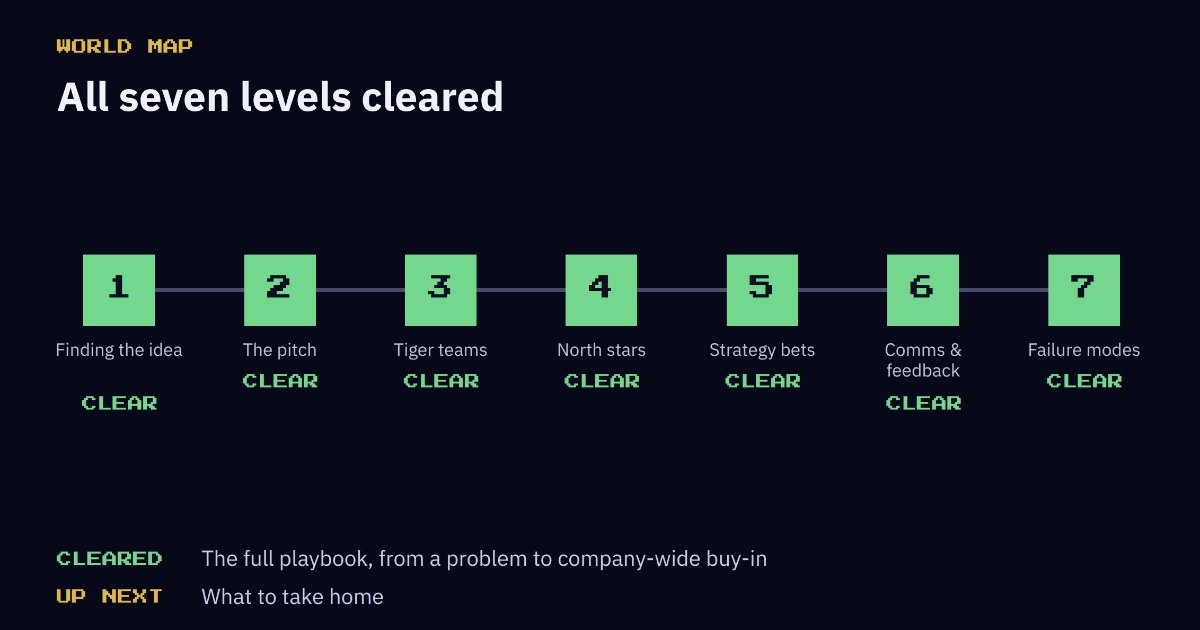
The talk presented a playbook organized as levels in a video game. The first step is finding the right problem. Behrens suggested looking at company communications, incident trends, technical debt, conversations with other tech leads, and gaps between team charters, then deciding whether the problem is worth solving now, whether it is foundational or compounding, and whether one is the right person to lead it.
Next comes the pitch. Behrens recommended a short problem statement that explains the intent, the expected value, the problems with supporting evidence, why the work matters now, and dated next steps. He suggested leaving possible approaches open so the people who join can shape them, and testing the statement early with a few colleagues, including the likeliest dissenter.
The presentation then covered building a small tiger team focused on creating the strategy rather than executing it. Behrens highlighted the importance of mixing perspectives, choosing people comfortable with ambiguity, getting manager support, and agreeing on scope, timeline, and a clear stop condition from the start. He shared that his first meeting had far too many people and still missed key functions, and emphasized that the most important trait of a good team is making it safe to push back.
With a team in place, the next step is a north star, a short aspirational statement that gives direction and helps answer whether a piece of work moves the organization closer or farther from its goal. Behrens noted that writing a good north star is harder than it looks, and recommended drafting it with the team and pairing it with key outcomes that define what must be true.
The strategy itself, according to Behrens, is simply a set of choices. He described writing strategy bets as a choice versus another reasonable choice, naming the tradeoff explicitly, keeping each bet short, and revisiting them over time. If a bet does not feel a little uncomfortable, he said, it is probably not a real bet. Keeping only a small set of active bets helps the strategy stay focused.
The talk also emphasized communication and feedback. Behrens suggested expanding support gradually from the immediate team to managers, directors, and executives, recruiting champions across the organization, and openly showing how feedback changed the strategy. Success, he said, is when you are not in the room and people can still explain the work. He also reviewed common failure modes, such as unclear problem statements, the wrong team, vague north stars, bets that are not really bets, and strategies that nobody knows exist.
The presentation concluded by encouraging engineers to keep strategy simple, communicate it widely, use a short north star to steer decisions, and adapt the playbook to their own context. As organizations launch more initiatives in parallel, especially around AI, the ability of senior engineers to align many teams around a shared technical direction may become as valuable as the systems they build.