科技
机器人在公园里巡逻,在首尔富裕的江南区提供餐食服务
中文译文
在首尔繁华的江南区,这里向来以璀璨的摩天大楼、豪华精品店以及K-pop的华丽风格而著称。如今,这里的新任公务员是轮式机器人,它们负责净化图书馆的空气,还会被安装在清洁工的背上协助工作。根据最近推出的扩展版市政试验计划,江南区正在将人工智能驱动的机器人应用于五项日常公共服务中——在公园里巡查火灾隐患、清理养老院的午餐托盘,以及协助街道清洁工搬运重物。这一计划将这个繁华的城区变成了韩国机器人初创企业的实地测试场,这些企业希望证明自己的机器能够应对城市街道上的各种不可预测情况。这一举措反映了韩国全国范围内的更广泛努力,韩国目前在全球工业机器人密度方面处于领先地位——每10,000名制造业工人中就有超过1,000台机器人——如今该国正努力将自动化技术从工厂引入日常生活。面对发达国家中人口老龄化速度最快、出生率最低的问题,韩国的决策者及科技企业越来越将服务机器人视为弥补劳动力短缺的重要手段,而非仅仅是未来派的新奇产品。
江南区区长金贤基表示:“为了让机器人真正成为民众所需的服务,必须在实际环境中而非实验室里验证其安全性和便捷性。”
2024年启动的江南区机器人测试平台项目通过公开竞争选拔私营企业,每家企业可获得最高3000万韩元(21,500美元)的资金支持,用于支付实地测试费用。今年已有五家企业入选该计划。
目前已有几台机器人开始投入使用。在苏西奥社会福利中心,由RGT研发的自主服务机器人穿梭于午餐时段的人群之中,为人们送餐并收集空盘子,从而减轻志愿者的重复性重体力劳动,同时帮助行动不便的老年居民。在其他地方,SK Intellix研发的三台自主空气净化健康机器人安静地在莫特戈尔图书馆、江南区档案馆以及一家当地公共卫生中心内移动,清除室内陈旧的空气。在盖波洞和道谷洞的居民区,清洁工们则穿着由FRT Robotics开发的无动力可穿戴外骨骼装置——这种结合了低技术和高技术的装置旨在减轻他们在艰苦的垃圾回收工作中的肌肉负担。该社区最新的机器人辅助工具将在未来几周内到位。在永东大路这条繁忙的商业大道上,由于存在大量关于非法吸烟的投诉,Neubility公司研发的自主巡逻机器人即将开始在人行道上巡逻,以礼貌但持续的方式提醒人们不要吸烟,从而让人工检查员不必反复处理这类问题。
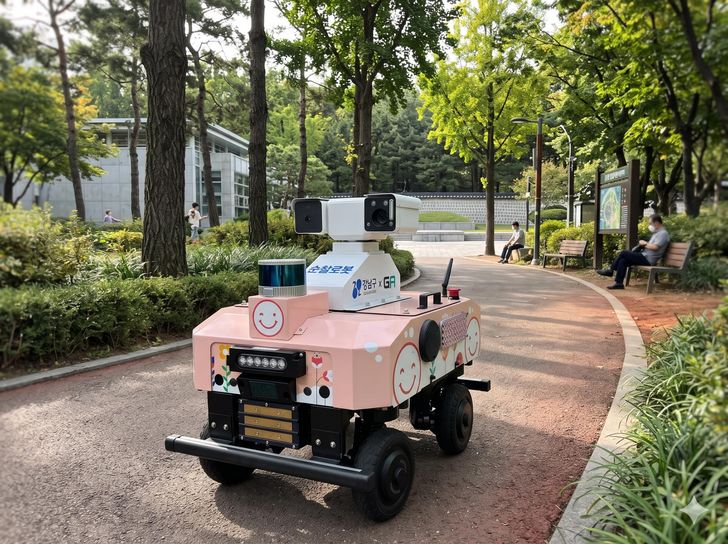
12月,Guardian AI公司的户外巡逻装置将在道山公园开展全天候巡逻,同时监测火灾风险和安全隐患,还为推婴儿车的家长提供语音导览服务。
这些试验将持续到2026年12月至2027年4月。区政府计划将实际运行中出现的故障以及用户反馈反馈给这些初创企业,确保在江南区的机器人队伍正式投入使用之前,这些机器能够学会应对从不平坦的人行道到持怀疑态度的行人等各种情况。
本文由生成式人工智能辅助撰写,并经《韩国时报》编辑。
原文
In Seoul’s affluent Gangnam District, long synonymous with glittering skyscrapers, luxury boutiques and K-pop glamour, the newest public servants roll on wheels, purify library air and strap onto the backs of sanitation workers.
Under an expanded municipal trial unveiled recently, Gangnam District is deploying artificial intelligence (AI)-powered robots across five everyday civic roles — patrolling parks for fire hazards, clearing lunch trays at a senior center and assisting street sweepers with heavy lifting. The program transforms the bustling urban district into a live testing ground for Korean robotics startups eager to prove their machines can survive the unpredictability of real city streets.
The initiative underscores a wider national push across Korea, which already leads the world in industrial robot density — with more than 1,000 robots per 10,000 manufacturing workers — and is now racing to bring automation out of factories and into daily life.
Facing one of the fastest-aging populations and lowest birthrates among developed economies, Korean policymakers and tech companies increasingly view service robots not as futuristic novelties, but as essential reinforcements for a shrinking workforce.
"Robots must have their safety and convenience verified in real-life settings, rather than inside a laboratory, to establish themselves as services that citizens truly need," Gangnam District head Kim Hyun-ki said.
Launched in 2024, Gangnam District’s robotics test-bed program selects private companies through an open competition and provides up to 30 million won ($21,500) per firm to cover field-testing costs. Five companies were chosen for this year’s cohort.
Several machines are already clocking in.
At the Suseo Social Welfare Center, an autonomous serving robot built by RGT weaves through the lunchtime crowd to deliver hot meals and bus empty trays, sparing volunteers from repetitive heavy lifting and assisting older residents with limited mobility.
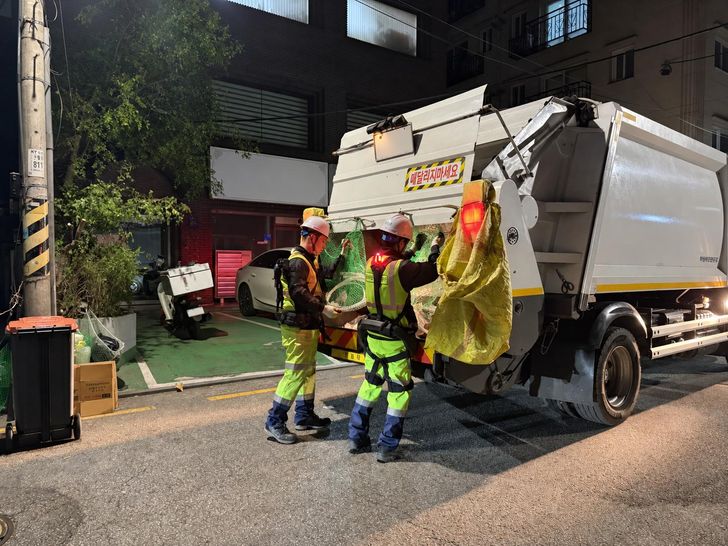
Elsewhere, three autonomous air-purifying wellness robots from SK Intellix glide quietly through the Motgol Library, the Gangnam District Archives and a local public health center, hunting down stale indoor air. And in the residential neighborhoods of Gaepo-dong and Dogok-dong, sanitation workers are strapping on unpowered wearable exoskeletons developed by FRT Robotics — a low-tech-meets-high-tech boost designed to ease muscle strain during grueling recycling runs.
The neighborhood’s newest robotic enforcers will arrive over the next few weeks.
Along a busy stretch of Yeongdong-daero, a major commercial boulevard plagued by illegal smoking complaints, an autonomous patrol robot from Neubility will soon cruise the sidewalks broadcasting polite but persistent no-smoking reminders — sparing human inspectors from repetitive confrontations.
In December, an outdoor patrol unit from Guardian AI will begin day-and-night rounds at Dosan Park, scanning for fire risks and safety hazards while doubling as an audio tour guide for strollers.
The trials will run through December 2026 to April 2027. District officials plan to feed real-world glitches and user feedback back to the startups — ensuring that before Gangnam District’s robotic workforce goes permanent, the machines learn how to handle everything from uneven sidewalks to skeptical pedestrians.
This article was published with the assistance of generative AI and edited by The Korea Times.