社会民生
得克萨斯州一个警察局因一次移民逮捕行动就获得了10万美元,而且还有可能赚取更多。
中文译文
去年春天,北德克萨斯州一个名为潘特戈的小镇的警察局长向镇议会提出了一个看似大胆的提议,旨在为警务工作筹集更多资金。他的部门可以考虑接受联邦政府的提议,参与移民执法工作。
“我不能说资金是无限的,但相关基金里确实有相当可观的金额,”潘特戈警察局长罗伯特·赖夫在4月的会议上说道,当时镇议会成员批准了与移民及海关执法局的协议。他的判断是正确的。去年6月,潘特戈仅因一起移民相关逮捕行动就获得了10万美元。未来它有望获得更多资金。
赖夫在向议会做的汇报中预测,联邦政府的拨款将为这座位于沃思堡以东几英里处的、拥有2500名居民的小镇带来额外72万美元的资金。作为参考,加上此前已获得的资金,这一数额大约相当于该镇去年210万美元警察预算的40%。截至9月中旬,该州共有429个执法机构与ICE签订了协议,这是唐纳德·特朗普总统为加快驱逐行动所采取的措施之一。得克萨斯州在这些被称为287(g)协议的合作伙伴关系中处于全国领先地位,这类协议授权地方警察在履行日常职责时进行移民相关逮捕。长期以来,对全国各地地方政府而言,参与此类计划所能获得的资金支持一直是一大动力。
这项联邦计划向地方执法机构提供数百万美元的资金,却几乎不对成果提出明确要求,也不对资金使用情况进行严格监管。KXAN查阅了九次地方政府会议的记录,发现得克萨斯州的执法官员一再向当地民选官员宣传这项计划,称其能为资金紧张的执法部门带来好处。就在潘特戈决定加入该计划的同一个月,圣安东尼奥附近好莱坞公园这个小型郊区的警察局长也向市议会提出了类似的建议。他说,该市“能从员工的工作时间中获得实际收益”。
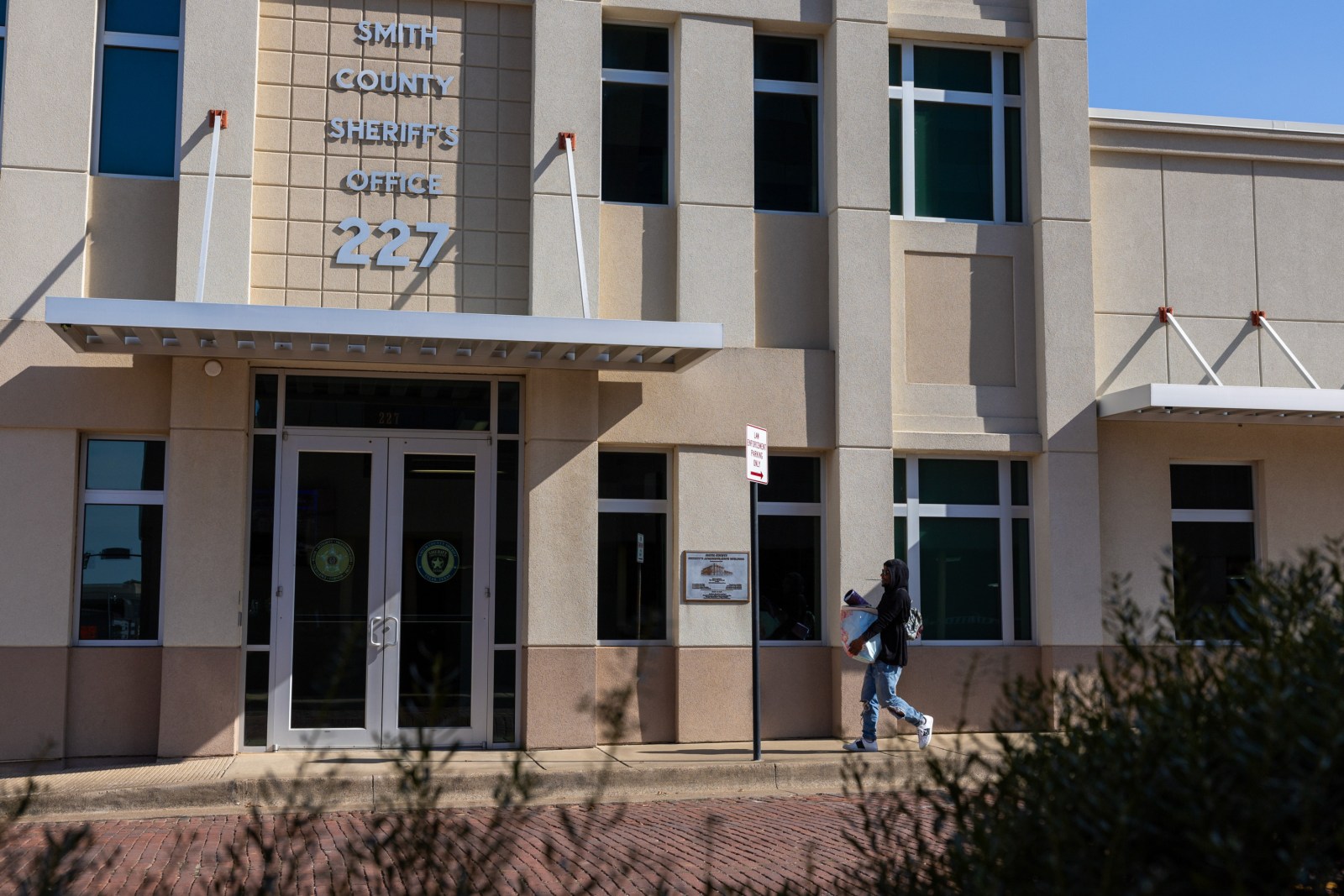
在德克萨斯州东部的史密斯县,警长拉里·史密斯告诉县议员们,“设备、燃油消耗、里程费等相关费用”都可以得到报销,此外还会有一笔10万美元用于购买两辆新车辆,以及支付加班费。
“联邦政府多久会为我们提供一次资金支持?”史密斯县的议员约翰·摩尔问道。
“不经常,”警长回答。他拒绝接受KXAN的采访。
总部位于奥斯汀的移民律师凯特·林肯-戈尔德芬奇担心,地方执法部门会变得依赖这些经济激励,将来很难退出该计划。
“我担心这些资金会如何影响这些小型警察部门的心态,”她说。在德克萨斯州狭长地带,哈特利县警长钱兹·福勒表示,该部门获得的几乎所有联邦资金都用于支持其日常运作,同时也用于移民相关工作。据KXAN获得的记录显示,从1月到7月初,该警局依据287(g)条款实施了54次逮捕,其中大多数是针对轻微的交通和车辆违规行为。在此期间,该警局获得了超过205,000美元的资金。到去年夏天,这些资金中约有30,000美元被用于支付工资、为获得287(g)认证的警员发放额外津贴、工资税、退休金以及“车辆采购”等开支。福勒称,几乎所有与287(g)条款相关的资金都“用于我们日常工作中所需的各项开支”。其他当地城市及执法部门官员表示,这些额外资金有助于警员保护社区并履行核心职责。ICE未回应关于就此话题进行采访的请求,而是提供了一份说明该计划的声明。其网站称,该计划针对的是危险的刑事犯罪者。
尽管通过电话、电子邮件及当面方式多次试图联系市长、镇议会成员、城市经理和警察局长,潘特戈的官员们仍拒绝回答KXAN关于该部门自8月以来是否参与该计划的疑问。
“我们目前没有兴趣接受采访,”唯一作出回应的城市经理莱斯利·加洛韦说道。得克萨斯公共政策基金会的一名高级研究员阿蒙·布莱尔承认,这些资金能够帮助那些预算紧张的部门,包括用于支付加班费。但他表示,应加强对联邦资金使用情况的监管。
KXAN获得了美国移民及海关执法局与史密斯县警长办公室以及得克萨斯州东部一个约有5,300人口的布尔拉德镇警察部门之间的服务协议。这些协议允许任何一方在提前60天通知的情况下终止协议。但协议中并未规定如果协议终止,联邦政府可以收回资金。
这正是潘特戈选择该计划的原因之一。警察局长向镇议会成员表示,该镇的警察部门可以获得联邦资金,之后无需承担任何处罚即可退出该计划,并保留已购买的设备,只需至少进行一次移民逮捕即可。
从4月底到6月中旬,该镇共进行了两次移民逮捕。“你是美国公民吗?”
与ICE合作的地方执法机构可以选择三种模式,其中两种旨在识别那些已被关押且可能面临驱逐的人。
特朗普在第二个任期开始时重新启用了第三种模式,即特别工作组模式。由于该模式存在诸多问题,特别工作组协议常常让民权和移民权利组织感到担忧:在司法部调查发现参与该模式的治安官办公室存在侵犯民权行为后,ICE于2012年开始逐步取消这种模式。
不过,特别工作组协议也能带来经济利益。
根据KXAN获得的服务协议,一旦合同开始执行,这些机构因“有目的、有计划地”开展移民执法活动而获得的工资、加班费及福利补贴可得到联邦政府的补偿。他们还可以获得定期的季度激励金,以及用于购买设备、技术和车辆的一次性补贴,不过KXAN获得的联邦备忘录和协议并未明确说明各机构可以购买哪些物品。
在奥巴马执政期间,由于联邦调查揭露了亚利桑那州和北卡罗来纳州治安官办公室存在的侵犯民权行为,国土安全部停止了任务组模式协议的续签。
自特朗普重新上任以来,这种协议模式已成为三种协议类型中最常见的一种。根据9月发布的ICE参与数据,仅2026年德克萨斯州就签署了至少241份任务组模式协议,而同一时期其他两种模式的协议总数仅为30份。
2025年初总统恢复任务组模式后,史密斯县是德克萨斯州首批签署此类协议的地区之一。摩尔是史密斯县委员法庭中唯一同意接受KXAN采访的成员,他解释了为何认为委员们希望建立合作关系。
他首先提到的词是“预算”。
摩尔说:“我们各部门所需的任何培训,或是必须进行的培训,都需要资金支持,而我们很少有机会从县外税收中获得培训资金。只要能为纳税人节省开支,我完全支持。”
在KXAN调查过的93家德克萨斯州执法机构中,史密斯县获得的资金比其他任何机构都多。根据KXAN获得的记录,从2025年1月到2026年6月,该县的治安官办公室获得了近220万美元的联邦287(g)项目资金,这一数额约占其2025财年预算的12%。去年11月,警长史密斯在专员法庭上表示,虽然用这些钱购买的车辆将用于287(g)计划,但“这并不意味着,如果我们正在处理当前事务,就不会去处理通过无线电传来的其他任务。我们仍会去做。我们尽量不将287(g)计划与其他执法任务分开,而是将所有工作一起处理。”
史密斯县警长办公室的198名持证警官中约有120人参与了该计划。从2025年10月到7月期间,他们共实施了124起移民执法行动。KXAN电视台向该部门索要了287(g)计划下实施的拦截行动清单以及相关的指控信息。史密斯县称,在这些拦截行动中,有100多起并未涉及任何刑事指控。
何塞·罗德里格斯和他的23岁儿子巴勃罗·罗德里格斯就是受影响的人士之一。六月底的一个下午,两人驾车行驶在东德克萨斯州泰勒市的一条环形公路323号上。泰勒是一座拥有113,000人口的城镇。他们曾在炎热的夏季里工作数小时,现在正前往Chick-fil-A为家人购买午餐。
这时,他们身后出现了红色和蓝色的警灯。执法人员称,由于皮卡上连接的拖车缺少车牌,且缺少双轮防泥板,他不得不将他们的黑色加长驾驶室工作卡车拦下。
监控录像显示,警探要求何塞·罗德里格斯下车。“你会说英语吗?”警探随后问道。何塞·罗德里格斯举起右手,将拇指和食指并拢。
“会一点?”警探问,接着又问:“你是美国公民吗?”
那人摇头回答:“不是。”
几秒钟后,警探将何塞·罗德里格斯的双手反绑在背后,并给他戴上了手铐。他最终被从史密斯县监狱转移到位于泰勒以西约两小时路程的ICE拘留中心。他的儿子是美国公民,称何塞·罗德里格斯被拘留了大约三个月后遭驱逐回墨西哥。
当史密斯县警探在6月将他拘留时,KXAN并未找到他有任何犯罪记录或被捕记录。
“就那样,他不见了,”帕布罗·罗德里格斯后来对KXAN说,“我父亲不见了。”
帕布罗·罗德里格斯表示,执法官员“把我们描绘成罪犯、强奸犯、暴力分子。我们并非如此。我们只是试图过上更好生活的普通人。唯一的区别就是我们的肤色,仅此而已。”
德克萨斯州该计划的未来
本月初的选举使得至少在德克萨斯州,287(g)计划的未来变得不确定。虽然特朗普政府已与当地执法部门达成协议,要求其与移民官员合作,但国会拥有更广泛的监督权力,其中包括对资金分配的决策权。1月,民主党人将掌控国会的两院,包括德克萨斯州新当选的参议员詹姆斯·塔拉里科在内的许多人都对ICE的执法手段提出了批评。不过,目前尚不清楚他们将把多少精力集中在移民执法方面,尤其是287(g)计划上。
在地方层面,共和党州参议员查尔斯·施韦特纳曾在2025年提出一项法案,要求德克萨斯州的大多数警长办公室参与该计划。他希望在即将到来的立法会议期间扩大这一要求,将警察部门等其他执法机构也纳入其中。布莱尔工作的那个保守派智库也持相同观点。
但在11月的中期选举之后,要获得对这类立法的支持可能会更加困难。施韦特纳保住了他在州参议院的席位,共和党人也维持了在该议院的多数席位,但民主党人首次在一代人的时间里掌控了州长官邸和州众议院。任何新法案都需要获得两院以及州长签署的批准,或者要有足够的立法支持来推翻否决。
早在选举之前,民主党人吉娜·伊诺霍萨就在一份新闻稿中呼吁州长格雷格·阿博特“要求特朗普政府承担责任,停止为那些恐吓社区、违反法律的ICE行动提供支持”。该新闻稿并未直接提及287(g)计划。伊诺霍萨在本次选举中击败了阿博特,将于1月就任州长。她没有回应本报道的置评请求。本州的这项计划还可能受到本月民主党人纳森·约翰逊和莎拉·埃克哈特当选的影响。约翰逊赢得了州总检察长职位的竞选,而埃克哈特则成功当选为州审计长。
作为州参议员,约翰逊曾反对要求治安官办公室参与该计划的强制规定。他今后将负责执行相关法律,该法律要求大多数治安官在12月1日前与ICE达成协议。约翰逊表示,如果那些未能遵守规定的治安官有“合理的执法理由无法达成287(g)协议”,他会在决定是否起诉他们时行使自由裁量权。
他还对州总检察长继续参与该计划表示质疑。现任州总检察长肯·帕克斯顿于2025年2月签署了287(g)特别工作组示范协议。“司法部长办公室肩负着极其重大的责任,”约翰逊说。“自该州建立以来,这些责任中从未包括将员工外包给联邦机构,让他们从事我们既没有受过培训也没有相应资质的工作,这还会让我分心,无法专注于办公室的职责。”
约翰逊并未完全排除在某种情况下与ICE合作的可能性,前提是这能让他办公室调查ICE特工在德克萨斯州犯下的罪行。
与此同时,埃克哈特将负责监管一项价值2000万美元的拨款计划。该计划是州议员两年前设立的,旨在帮助各警长办公室支付参与287(g)计划时那些无法从联邦政府获得补偿的费用。据KXAN获得的数据,截至9月底,审计办公室已向78个警长办公室拨款超过650万美元。在竞选期间,埃克哈特警告称该计划的费用最终可能会由当地纳税人承担,称其“不可持续”。当选后,她表示将“进行287(g)审计,以展示这些费用是如何推高房产税的”。
即便州政府领导层不扩大参与要求或取消现有规定,各部门仍可选择继续收取联邦资金用于执行移民法律。
在奥斯汀东南部的费耶特县,警长办公室的戴维·贝耶中尉告诉KXAN电视台,他的办公室已获得的287(g)项目资金总计约80万美元,这些资金可用于购买设备,而这些设备也可用于日常警务工作。
“如果他们愿意额外支付费用让我们承担这项工作,”贝耶说,“我们非常乐意接受这些资金,因为这能为我们的纳税人节省开支。”
原文
Last spring, the police chief in a tiny North Texas suburb called Pantego went before his town council with what might have sounded like an audacious pitch to bring in more money for policing.
His department could accept the federal government’s offer to get into the business of immigration enforcement.
“I won’t say there’s unlimited funding, but there’s quite a bit of money in the fund,” Pantego Police Chief Robert Rife said during the April meeting in which council members approved an agreement with Immigration and Customs Enforcement.
He was right. After a single immigration arrest this past June, Pantego received $100,000.
It stands to earn much more.
Rife predicted in his presentation to the council that federal grants could bring in an additional $720,000 for the 2,500-resident town a few miles east of Fort Worth. For perspective, combined with the money it had already received, that’s roughly equivalent to 40% of the town’s $2.1 million police budget last year.
Pantego is one of 429 law enforcement agencies in the state as of mid-September that have entered into agreements with ICE as part of President Donald Trump’s efforts to accelerate deportations. Texas leads the nation in these partnerships, known as 287(g) agreements, which authorize local officers to make immigration arrests during their normal course of duty. A key incentive for local governments across the country has long been the funding that comes with participation.
The federal program funnels millions of dollars to local law enforcement while requiring few measurable results and little tracking of how the money is spent. KXAN reviewed minutes from nine local government meetings and found that, over and over again, Texas law enforcement officials sold the program to their local elected leaders as a boon for their cash-strapped departments.
The same month Pantego decided to join the program, for example, the police chief in the small suburb of Hollywood Park near San Antonio made a similar pitch to his city council. The city “actively profits on payroll for the time spent,” he said.
And in Smith County in East Texas, Sheriff Larry Smith told county commissioners that “equipment, use of fuel, mileage and things of that nature” could all be reimbursed, plus there would be $100,000 for two new vehicles and money for overtime.
“How often do the feds offer us money for anything?” Smith County Commissioner John Moore asked.
“Not very often,” the sheriff responded. He declined to speak with KXAN.
Austin-based immigration attorney Kate Lincoln-Goldfinch worries that local law enforcement will become dependent on the financial incentives, making it difficult to pull away from the program in the future.
“I’m concerned about what this money is going to be doing to the mindset of these small police departments,” she said.
In the Texas Panhandle, Hartley County Sheriff Chanze Fowler said nearly all the federal funding his department receives supports its regular operations, in addition to immigration work.
The sheriff’s office recorded 54 arrests under 287(g) authority from January to early July, most for minor traffic and vehicle violations, according to records obtained by KXAN. It received more than $205,000 during that time. By this past summer, it had spent about $30,000 on things like wages, extra pay for officers who became 287(g) certified, payroll taxes, retirement funds and “fleet purchases.”
Almost all of the 287(g)-related funds “go towards items needed for our everyday job,” Fowler said.
Other local city and law enforcement officials said the additional funds help officers protect their communities and carry out core duties. ICE did not respond to a request for an interview for this story but instead provided a statement that explained the program. Its website says the program targets dangerous criminal offenders.
Pantego officials have declined to answer KXAN’s questions about the department’s involvement with the program since August, despite repeated attempts to reach the mayor, town council, city manager and police chief by phone, email and in person.
“We are not interested in interviewing at this time,” said City Manager Leslie Galloway, the only official to respond.
Ammon Blair, a senior fellow for the Texas Public Policy Foundation, a conservative think tank that supports the program, acknowledged the money can help departments operating on thin budgets, including helping to pay for overtime. But he said there should be more oversight of how the federal money is spent.
KXAN obtained service agreements between ICE and the Smith County Sheriff’s Office and the police department in Bullard, Texas, a town of about 5,300 people in East Texas. The agreements allow either party to terminate with 60 days’ notice. None indicate that the federal government can reclaim funding if an agreement is terminated.
That was one of the selling points in Pantego. The department could get federal funding and eventually drop out of the program without penalty and keep the equipment already purchased, the police chief told town council members. All it had to do was make at least one immigration arrest.
Between the end of April and mid-June, it made two.
“Are You a U.S. Citizen?”
Local law enforcement agencies that join forces with ICE can choose among three models, two of which focus on identifying people already in jail who may be subject to deportation.
Trump revived the third kind, called the task force model, at the beginning of his second term. Task force agreements often worry civil and immigrants’ rights groups because of the model’s problematic track record: ICE started phasing them out in 2012, after Department of Justice investigations revealed that sheriff’s offices participating in the model had committed civil rights violations.
But task force agreements can also be lucrative.
Agencies can receive federal reimbursement for salaries, overtime and benefits for “conducting purposeful and intentional” immigration enforcement activities once the contract starts, according to a service agreement obtained by KXAN.
They can also get recurring quarterly incentive payments and one-time stipends for equipment, technology and vehicles, though federal memoranda and agreements obtained by KXAN don’t specify what agencies can purchase.
The Department of Homeland Security stopped renewing task force model agreements during the Obama administration after federal investigations revealed civil rights violations involving sheriffs’ offices in Arizona and North Carolina.
Since Trump’s return to office, the model has become the most common of the three agreement types. At least 241 task force model agreements were signed in Texas in 2026 alone, compared to just 30 combined for the other models in that time period, according to ICE participation data from September.
Smith County was among the first in Texas to sign on after the president reinstated the task force model in early 2025.
Moore, the only member of Smith County’s Commissioners Court who agreed to speak with KXAN, explained why he thought the commissioners wanted to partner.
His first word: “budgetary.”
“Any kind of training that any of our departments need to have, or are required to have, costs money, and it’s rare that we get an opportunity to get funding for training from outside county taxes,” Moore said. “Any time we can save the taxpayers money, I’m all for it.”
Smith County got more money than any other of the 93 Texas law enforcement agencies whose funding KXAN reviewed. The sheriff’s office received nearly $2.2 million in federal 287(g) funding from January 2025 to June 2026, according to records obtained by KXAN. That’s equivalent to about 12% of its budget for fiscal year 2025.
Smith, the sheriff, told the Commissioners Court last November that although vehicles purchased with that money would be used for the 287(g) program, “that doesn’t mean, if we’re out here, we won’t run to another call or take another call that comes across the radio. We will do that. We try not to separate 287(g) from our other law enforcement duties. We do it all together.”
About 120 of 198 licensed officers in the Smith County Sheriff’s Office participated in the program. Together, they conducted 124 immigration enforcement actions between October 2025 and July. KXAN requested a list of 287(g) stops from the department, in addition to any associated charge. Smith County listed no associated criminal charge for more than 100 of these stops.
Jose Rodriguez and his 23-year-old son, Pablo Rodriguez, were among those affected.
One afternoon in late June, the pair cruised along Loop 323, a circular segment of highway in Tyler, a city of 113,000 people in East Texas. They’d spent hours working in the summer heat at a construction job and were headed to Chick-fil-A to pick up lunch for their family.
Then red and blue lights appeared behind them. The law enforcement agent said that he’d pulled their black extended-cab work truck over because of a missing license plate on the trailer attached to the pickup and a missing dual-wheel mud flap.
Body and vehicle camera footage showed the detective requesting that Jose Rodriguez get out of the truck. “Any English at all?” the detective later asked. Jose Rodriguez raised his right hand, holding his thumb and index finger close together.
“Un poquito?” the detective asked, followed by, “Are you a U.S. citizen?”
The man shook his head and answered. “No.”
Seconds later, the detective pulled Jose Rodriguez’s hands behind his back and put him in handcuffs.
He was eventually taken from the Smith County jail to an ICE detention facility, about two hours west of Tyler. His son, who is a U.S. citizen, said Jose Rodriguez was detained for about three months before being deported to Mexico.
KXAN could find no criminal convictions or arrests on his record when the Smith County detective took him into custody in June.
“Just like that, he’s gone,” Pablo Rodriguez later told KXAN. “My dad’s gone.”
Law enforcement officers, Pablo Rodriguez said, “portray us as criminals, rapists, violent people. We’re not that. We’re just regular people trying to find a better life. The only difference is our skin. That’s pretty much it.”
The Future of the Program in Texas
Elections earlier this month have left the 287(g) program’s future uncertain, at least in Texas.
While the Trump administration has reached agreements with local law enforcement to work with immigration officials, Congress has broader oversight authority. That includes decisions about funding. In January, Democrats will take over both chambers of Congress and many, including freshman Texas Sen. James Talarico, have criticized ICE tactics. It’s unclear, however, how much of their focus will be on immigration enforcement and specifically on the 287(g) program.
More locally, state Sen. Charles Schwertner, the Republican lawmaker who authored a measure in 2025 that required most Texas sheriff’s offices to participate in the program, wants to expand the mandate during the coming legislative session to include other law enforcement agencies, like police departments. So does the conservative think tank where Blair works.
But support for such legislation may be harder to get after November’s midterm election.
Schwertner retained his state Senate seat, and Republicans maintained their majority in that chamber, but Democrats took control of the governor’s mansion and the state House of Representatives for the first time in a generation. Any new bills would require legislative approval from both chambers and the governor’s signature, or enough legislative support to override a veto.
In a press release well before the election, Democrat Gina Hinojosa called on Gov. Greg Abbott to “demand accountability from the Trump administration and stop enabling ICE operations that are terrorizing communities and violating the law.” The release did not mention the 287(g) program by name. Hinojosa beat Abbott in this month’s election and will take over as governor in January. She did not respond to a request for comment for this story.
The state program could also be affected by this month’s election of Democrats Nathan Johnson, who won the race for state attorney general, and Sarah Eckhardt, who won her bid to become state comptroller.
Johnson, as a state senator, opposed the mandate that sheriffs’ offices participate in the program. He will inherit responsibility for enforcing the law, which requires most sheriffs to seek agreements with ICE by Dec. 1. Johnson said he will use his discretion in deciding whether to sue sheriffs who fail to comply if they have “legitimate law enforcement reasons for not having a 287(g) agreement.”
He also questioned the state attorney general’s continued participation in the program. Current Attorney General Ken Paxton signed a 287(g) task force model agreement in February 2025.
“The attorney general’s office has tremendous, vast responsibilities,” Johnson said. “Never included among them since the creation of this state was outsourcing your employees to a federal agency for a purpose in which we’re not trained or qualified and which distracts me from the mission of my office.”
Johnson didn’t entirely rule out working with ICE in some capacity if it allowed his office to investigate crimes committed by ICE agents in Texas.
Eckhardt, meanwhile, will take over oversight of a $20 million grant program that state lawmakers created two years ago to help sheriff’s offices cover any costs of participation in the 287(g) program not reimbursed by the federal government. By late September, the comptroller’s office had awarded more than $6.5 million to 78 sheriff’s offices, according to figures obtained by KXAN.
During her campaign, Eckhardt warned that expenses for the program could eventually fall on local taxpayers, calling it “unsustainable.” After winning her seat, she said she would “do a 287(g) audit to show how that expense is driving up property taxes.”
Even if state leaders don’t expand the participation requirement or remove the current mandate, departments can choose to keep collecting federal money to enforce immigration law.
In Fayette County southeast of Austin, Sheriff’s Lt. David Beyer told KXAN that the 287(g) funding his office had already received totaled about $800,000, which helps purchase equipment it can also use for ordinary police work.
“If they want to pay us extra to do that job,” Beyer said, “we’re more than happily going to accept those funds, because that saves our taxpayers money.”