文化体育
墨西哥小说家通过人工智能玩偶、萨满以及“剥落”一书中的美来探索韩国。
中文译文
除了K-pop、K-dramas和K-beauty所具有的全球吸引力之外,韩国还有另一面。
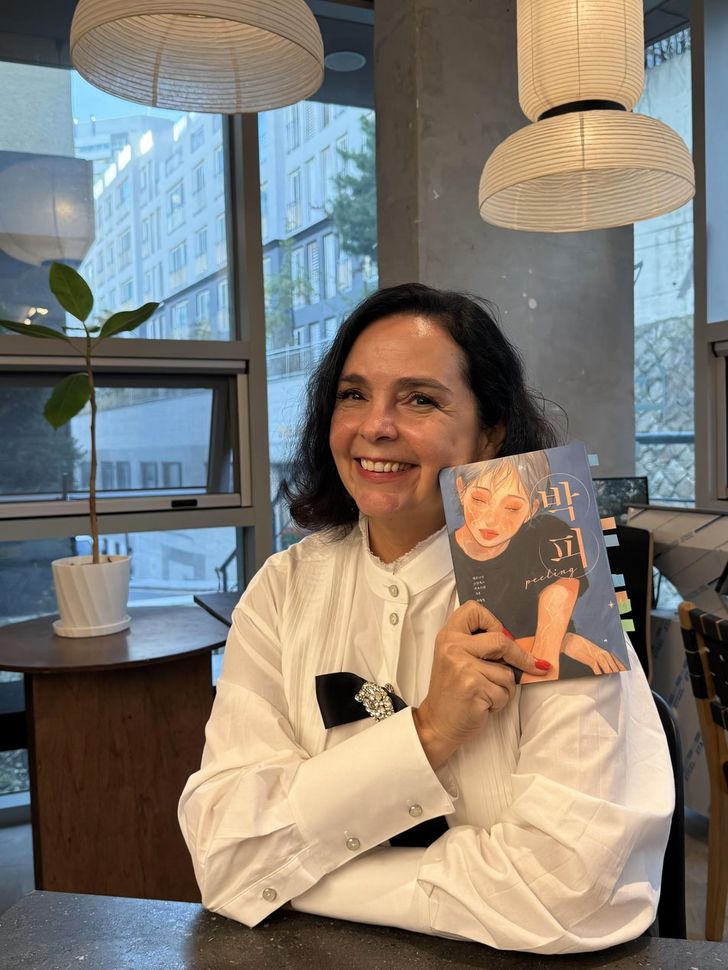
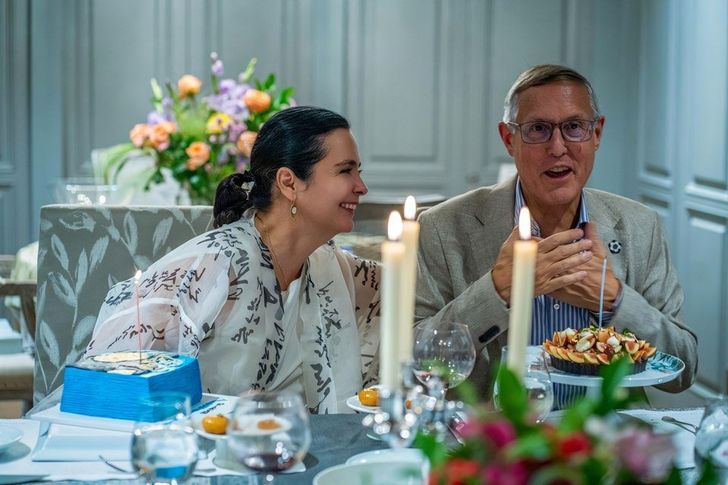
墨西哥人类学家兼小说家维罗妮卡·冈萨雷斯·拉波特曾与她的丈夫、墨西哥前驻韩大使布鲁诺·菲格罗亚·费希尔一起在首尔生活了五年多。她对这个国家的喜爱促使她超越其光鲜的外表,去探索一个前沿科技与古老信仰共存的社会的复杂性。
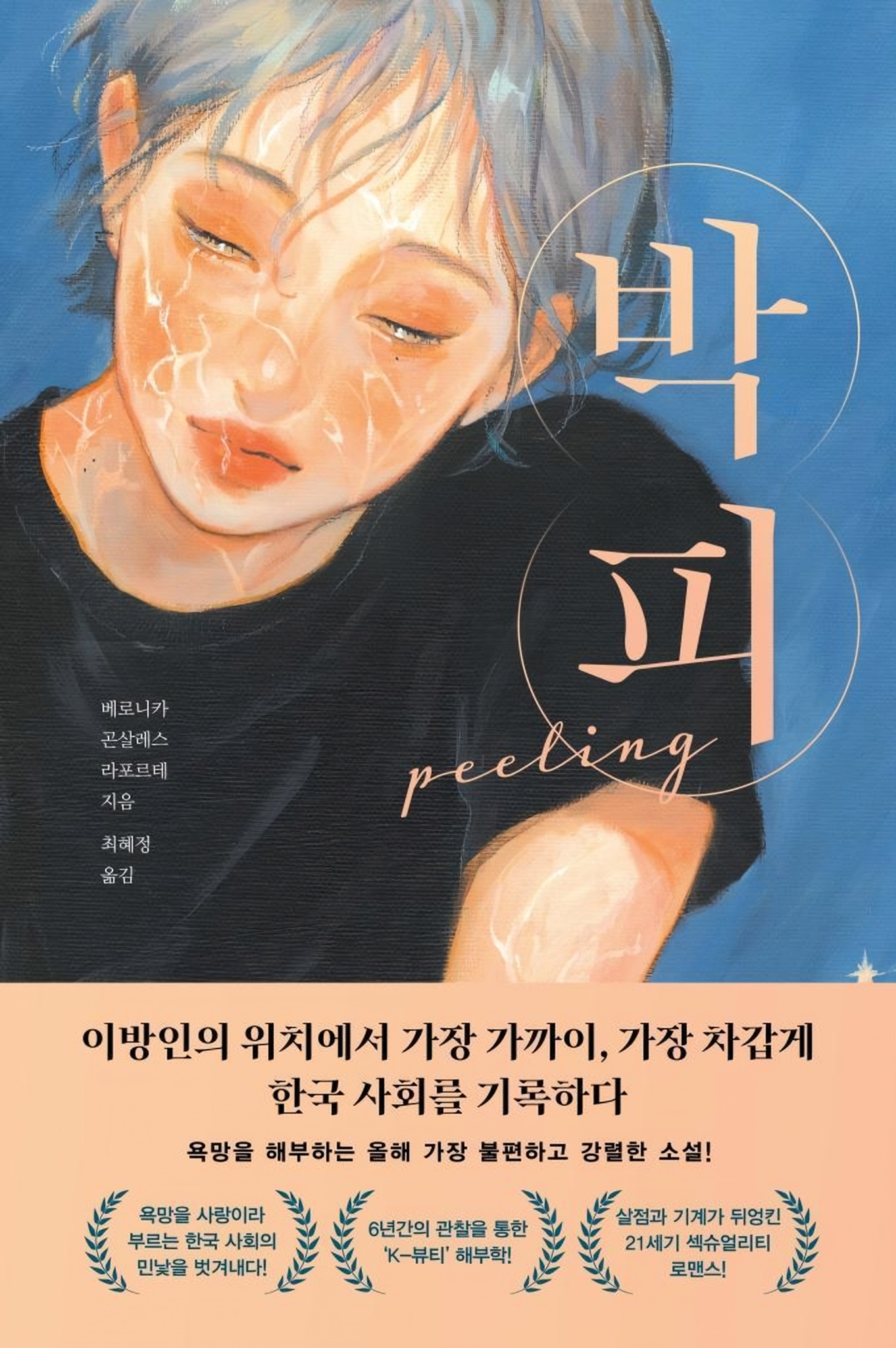
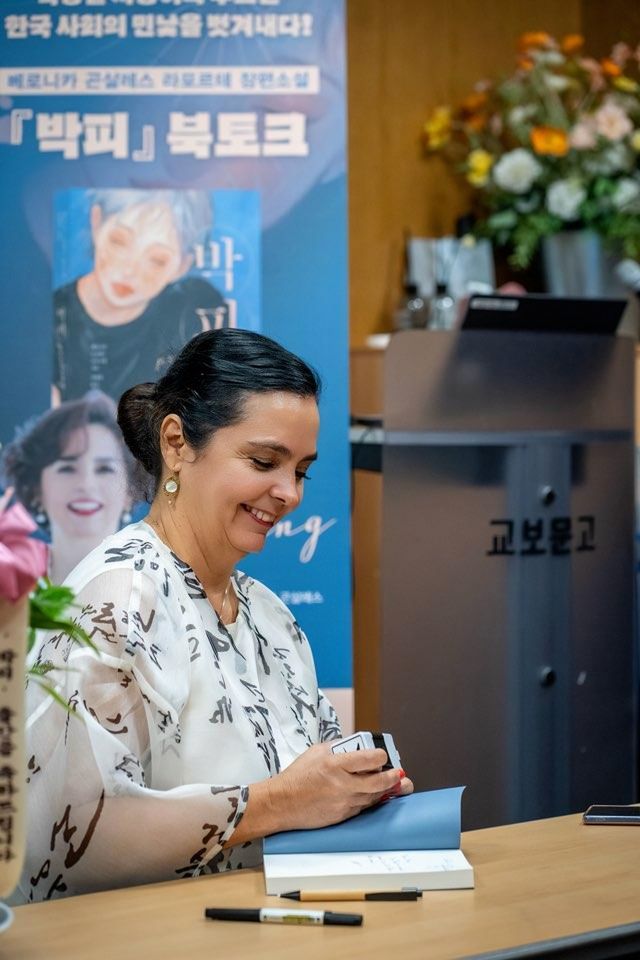
“我试图展现另一个韩国,因为我总是试图探寻事物背后的真相,”冈萨雷斯在接受《韩国时报》采访时这样说道。她正在创作的最新小说《剥落》正是通过美丽、孤独、性别和萨满教等相互交织的主题来探讨韩国社会。
从现实经历到虚构作品这部小说讲述了整形外科医生志浩的故事。在经历了一系列失败的恋情和一段孤独的时光后,他订购了一个名为成美的AI性爱玩偶,并爱上了她。随着他对这个玩偶的感情日益加深,他的父亲却患上了重病。一位萨满警告说,他父亲的病情与某位家族成员违背自然法则的行为有关,这迫使志浩不得不思考:是选择自己的幻想还是面对现实。
这一想法源于新冠疫情初期。当时她的面部出现严重红肿,一位朋友告诉她教堂和诊所是为数不多仍开放的地方,于是她去了皮肤科诊所。
“我不仅对建筑物上的灯光印象深刻,对建筑物内部的情况也同样惊叹,”她回忆道。“那正是我想要找到的——那些隐藏的地方,而非初次见到时所能看到的景象。”她与一位男皮肤科医生的相遇为小说的主角提供了灵感。后来,她在《韩国时报》上看到了两篇报道——一篇讲述疫情期间中国有尸体被装在塑料袋中的情况,另一篇则是关于一名韩国男子成功起诉海关部门,追回从中国进口的性爱玩偶的事迹。
这些素材成了她小说的基础,她于2020年开始写作,2024年完成这部作品。
这部小说最初以西班牙语写成,名为《K-Beauty》,后来被翻译成韩语并在韩国出版,以此向给予她灵感的国度致敬。她最终选择了韩语标题“Bakpi”,意为“剥落”,以此表达她想要剥开韩国社会的表面,看看其背后的真实面貌的愿望。西班牙语版本目前正在筹备中,即将出版。
剥开韩国社会的层层伪装
通过这部小说,冈萨雷斯借助社会中的种种复杂性,揭示了韩国社会鲜为人知的方面。这部小说展现了韩国与墨西哥截然不同的审美风格,将韩国描述为一个高度有序的社会,在那里一切事物都体现出视觉上的统一性。
“我在这里看到很多品牌都非常相似,窗户、颜色和装饰都一样,总是非常整洁,但却缺乏任何创意,”她说,并强调这并非批评,只是从一个外国人的视角出发的观察。她于2023年离开了韩国,但在最近的一次短暂访问中,她对记忆中那些橙色出租车消失了感到惋惜。
除了视觉上的差异,这部小说还探讨了她在韩国遇到的社会禁忌与偏见。其中一个角色Geon-hee是同性恋,他努力想要表达自己对朋友Ji-ho的感情。
她回忆起一位韩国朋友对同性恋的反应让她感到惊讶。“这里没有这个。我们这儿没有。”她回忆起朋友的话,显然朋友不愿谈论这个话题。基于这段经历,她试图巧妙地展现吉熙未说出口的情感。
作者还试图揭示与妇女权利和性别不平等相关的更广泛的普遍问题在韩国社会中的表现。
通过一直努力照顾丈夫和婆婆的智浩的母亲,这部小说探讨了年轻女性在家庭中历史上就处于弱势的地位,以及她们在与丈夫和公婆的关系中所承受的期望。
她强调,这些观察并非对韩国社会的评判,而是她试图认识到那些因为过于常见而难以被察觉的社会问题的一部分。“这些父权制机制已经存在多年,因此很难被察觉,”她说,并补充道,年轻一代需要认识到那些常常被忽视的事物。
超越表面的深情
她的小说并非仅仅试图探讨韩国的复杂性。这部小说表达了她对韩国的风景、文化遗产和传统的深厚情感,这些情感源自她在韩国的生活经历。
这种深情体现在描绘韩国文化遗产和自然美景的场景中,从志浩带成美参观昌德宫的花园,到通过志浩的视角描述他回到济州岛故乡时看到的汉拿山。“如果不了解历史,就无法展望未来,”作者说道。她解释说,自己希望向读者介绍韩国丰富的历史和独特的民族特色。同时,她也希望展现这个国家的美丽风景,因为在她看来,这些风景相比韩国的流行文化,仍不为国际受众所熟知。
“当我站在汉拿山顶时,可以看到那些小船、小屋,还有那片美丽的绿松石色海洋。济州岛与我在墨西哥的家乡库埃纳瓦卡很相似,都有熔岩石和蓝天,让我有宾至如归的感觉,”她说。
通过探索韩国的风景与传统,冈萨雷斯发现两国有很多相似之处。她发现了女性力量以及家庭重要性方面的共通点,并将这些主题融入小说中对济州岛传统女潜水员——海女——以及坚强女性角色的描绘之中。“我想谈谈祖母们的力量。拉丁美洲的母亲们也同样坚强坚韧,”她说。“我发现了种种联系。即便我们不说同一种语言,也不生活在同一个国家,我们其实非常相似。”
她还在两地的精神传统中发现了相似之处,尤其是萨满教。作为一位研究过墨西哥北部萨满教的人类学家——那里的萨满通常是男性——冈萨雷斯对韩国的泥堂师极为感兴趣,因为泥堂师大多为女性。她惊讶于这些传统在高度科技化的社会中依然能够蓬勃发展。
冈萨雷斯的小说不仅展现了韩国那些不为人知的复杂性,还揭示了跨越国界的共同价值观与传统,表明只有透过表面去看,才能更深入地理解并喜爱这个曾一度成为她家园的国家。
原文
Beyond the global appeal of K-pop, K-dramas and K-beauty lies another side of Korea.
For Mexican anthropologist and novelist Verónica González Laporte, who lived in Seoul for more than five years with her husband, former Mexican Ambassador to Korea Bruno Figueroa Fischer, her affection for the country inspired her to look beyond its polished image and explore the complexities of a society where cutting-edge technology coexists with centuries-old beliefs.
"I was trying to offer another Korea, as I always try to go behind the stage," González told The Korea Times, explaining the inspiration behind her latest novel, "Peeling," which explores Korean society through the intertwined themes of beauty, isolation, gender and shamanism.
From real-life encounters to fiction
The novel follows Ji-ho, a plastic surgeon who, after a series of failed relationships and a period of loneliness, orders an AI sex doll named Seong-mi and falls in love with her. As he grows increasingly attached to the doll, his father becomes critically ill. A shaman warns that his father's condition is linked to a family member's actions that defy the laws of nature, forcing Ji-ho to question whether to choose his fantasy or face reality.
The idea came to González at the start of COVID-19 pandemic. She had severe facial redness and visited a dermatology clinic after a friend told her that churches and clinics were among the few places still open.
"I was really impressed not only by the lights on the buildings, but what's inside the buildings," she recalled. "It was exactly what I wanted to find — the hidden places, not what you see your first time."
Her encounter with a male dermatologist inspired the novel's protagonist. She later came across two reports in The Korea Times — one showing bodies wrapped in plastic bags in China during the pandemic period and another about a Korean man who successfully sued customs authorities to recover a sex doll imported from China.
These fragments became the foundation of her novel, which she began writing in 2020 and completed in 2024.
Originally written in Spanish under the title "K-Beauty," the novel was translated into Korean and published in Korea as a tribute to the country that inspired it. She ultimately chose the Korean title "Bakpi," meaning "peeling," to reflect her desire to peel away the surface of Korean society and look at what lies underneath. A Spanish-language edition is currently in preparation for publication.
Peeling layers of Korean society
Through the novel, González draws on social complexities to reveal lesser-known aspects of Korean society.
The novel captures the contrasting aesthetics of Korea and Mexico, describing Korea as a highly organized society where visual uniformity is evident in everything.
"I saw a lot of brands here that are quite similar, with the same kinds of windows, colors and decorations, always very clean but without any fantasy," she said, stressing that this was not a criticism but an observation from a foreigner's perspective. She left Korea in 2023, but during a recent brief visit, she lamented the disappearance of the orange taxis she remembered.
Beyond visual differences, the story also explores the social taboos and prejudices that she encountered in Korea. One of the characters, Geon-hee, is gay and struggles to express his feelings for his friend, Ji-ho.
She recalled being surprised by a Korean friend's reaction to homosexuality.
"It doesn't exist here. We don't have this here," she recalled her friend saying, describing an apparent reluctance to discuss the subject. Drawing on that experience, she sought to portray Geon-hee's unspoken feelings with subtlety.
The author also sought to shed light on how broader universal issues surrounding women's rights and gender inequality play out in Korean society.
Through Ji-ho's mother, who constantly strives to care for her husband and mother-in-law, the novel explores the historically vulnerable position of young women within the family and the expectations placed on them in their relationships with their husbands and in-laws.
These observations, she stressed, were not a judgment of Korean society, but part of her effort to recognize social issues that can be difficult to notice precisely because they have become so familiar.
"These patriarchal mechanisms have been established for so many years that they are very difficult to detect," she said, adding that younger generations need to recognize what often remains unseen.
Affection beyond surface
Her novel is not simply an attempt to explore the complexities of Korea. The novel conveys her deep affection for the country's landscapes, cultural heritage and traditions, drawing on personal experiences from her stay in Korea.
This affection is reflected in scenes depicting Korea's cultural heritage and natural beauty, from Ji-ho taking Seong-mi to Changdeok Palace's gardens to descriptions of Mount Halla through Ji-ho's eyes as he visits his hometown on Jeju Island.
"You cannot go further or think about the future if you don't know your history," the author said, explaining that she wanted to introduce readers to Korea's rich history and distinct national identity. She also hoped to showcase the country's beautiful landscapes, which she felt remain less familiar to international audiences than its popular culture.
"When I was on top of Mount Halla, I could see all the little boats and houses, and the splendid turquoise sea. Jeju looks very similar to one of my cities in Mexico, Cuernavaca, with its lava stones and blue sky. I felt really at home," she said.
Through her exploration of Korea's landscapes and traditions, González discovered that the two countries had a great deal in common. She found parallels in the strength of women and the importance of family and wove those themes into the novel's portrayal of Jeju's haenyeo — traditional female divers — and its strong female characters.
"I wanted to talk about the power of grandmothers. Latin mothers are also very strong and tough," she said. "I found all these connections. Even if we don't speak the same language or live in the same country, we are so similar."
She also found parallels in the spiritual traditions of both places, particularly shamanism. As an anthropologist who has studied shamanism in northern Mexico, where the practitioners are usually men, González was fascinated by Korea's mudang, who are most commonly women, and was struck by how traditions continue to thrive in a highly technologically advanced society.
González's novel offers more than a glimpse of Korea's hidden complexities. It reveals shared values and traditions that transcend borders, demonstrating how looking beyond the surface can foster a deeper understanding of — and affection for — a country that for a while became her home.