科技
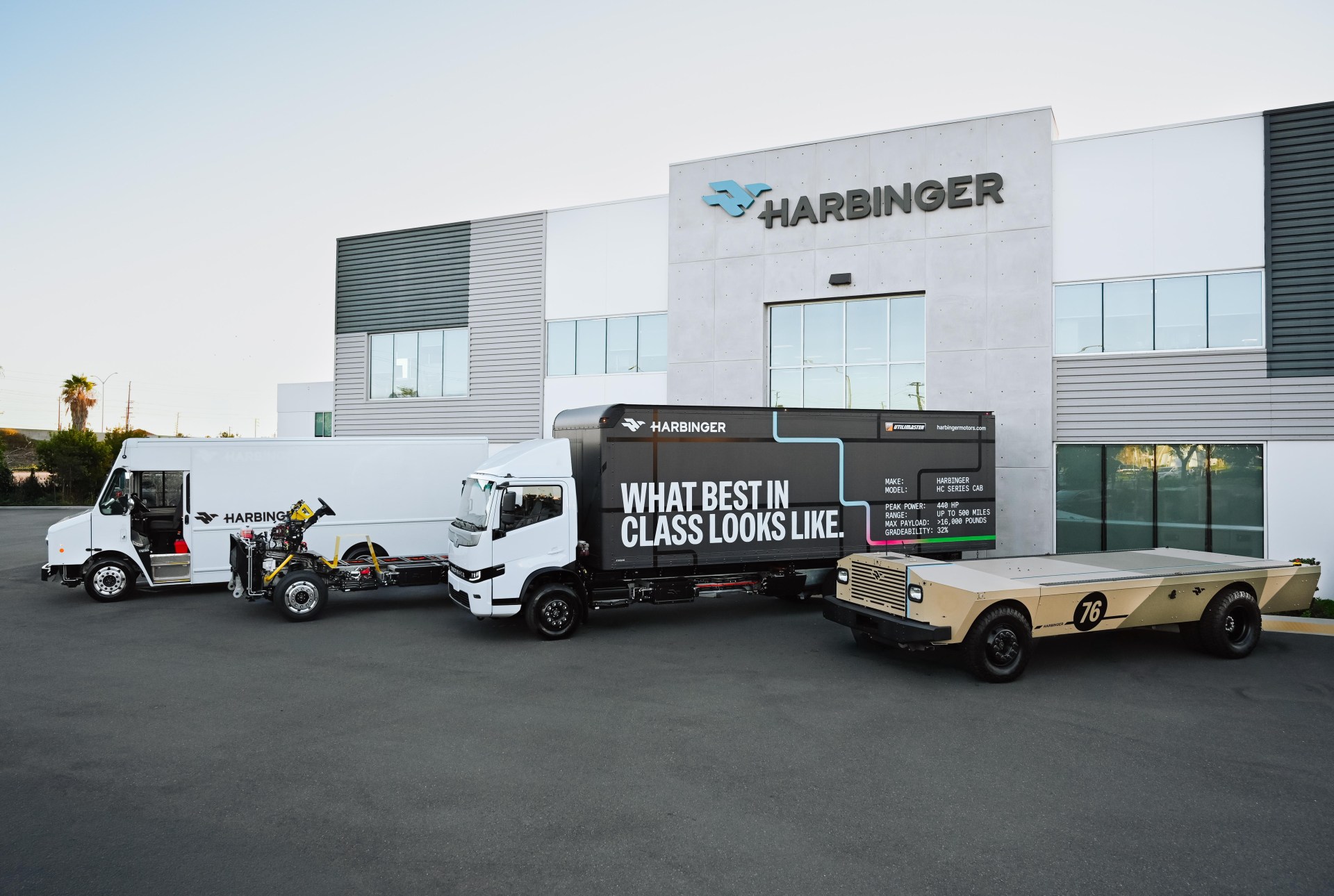
Harbinger正在制造那些虽不吸引人但能维持经济运转的电动汽车。
中文译文
当传统汽车制造商纷纷放缓电动汽车的发展步伐时,有一家初创企业却在加速前进。本月初,电动卡车制造商Harbinger在D轮融资中筹集了2.4亿美元,此前的成功表现还包括来自FedEx的3亿美元订单以及与美国军方签订的新国防合同。
Harbinger通过完全避开消费级电动汽车的炒作热潮,转而专注于那些支撑经济运转的实用型车辆——4级至6级的送货货车和厢式卡车,从而不断取得成功。该公司首席执行官约翰·哈里斯向我解释称,他们的策略很简单:瞄准那些被忽视的商业领域,在这些领域传统卡车表现不佳,而大型汽车制造商也不愿投入精力竞争。“我们并没有去解决那些显而易见的大问题,因为大家都在努力解决这些问题,结果利润空间就被压缩到几乎为零,”哈里斯说。“我们正在解决那些一直存在却早已被人们视为理所当然的问题,人们不再将其视为问题,而只是当作生活的一部分。这就像是对生活征收的一种税。”
Harbinger由曾任职于Canoo、QuantumScape和Faraday Future的资深人士于2021年创立,旨在填补汽车市场中的结构性空白——目前大多数乘用车电动平台缺乏足够的耐用性以实现大规模生产,而重型平台则因重量过大、成本过高而难以实现小型化生产。
“在汽车行业里,有第一类企业,也有第八类企业,”哈里斯说。“而介于两者之间的市场简直就是一片荒地……对于大型企业来说,这个市场实在太小,根本无法满足其发展需求。”这并不是说该行业没有尝试过。福特和通用汽车分别推出E-Transit和BrightDrop配送车,试图让中型商用车领域实现电动化,但由于销量不佳以及失去联邦政府的激励政策,它们不得不停止或取消这些车型。
哈里斯认为,大型汽车制造商并不适合承担这项任务,因为它们过度依赖第三方供应商来生产所有必要的零部件。这样一来,相关工作会变得过于分散且成本高昂,投资回报也不够理想。正因如此,哈宾杰公司试图采用更加垂直整合的方式,自行生产电池组和驱动单元,随后再生产逆变器。
“如果在汽车制造领域不实现垂直整合,就无法打造出可行的产品,”哈里斯说。“我们认为,只有当电动车的采购价格能与内燃机汽车相竞争时,它们才具有可行性。”当然,哈里斯和他的联合创始人们在之前的创业项目中都经历过失败。Harbinger的首席技术官菲利普·韦克曾是电动汽车初创公司Canoo的联合创始人,该公司因资金耗尽于2025年申请破产。哈里斯本人在中国那家局势动荡的电动汽车公司法拉第未来工作过一年,之后又加入了Xos Trucks,随后又到了帕尔默·拉克利的Anduril公司。
“我在法拉第未来时只是个工程师,没有任何决策权,”哈里斯说。“所以不能说‘约翰,为什么法拉第未来会失败?’我可以列举很多原因,但并非因为我设计的塑料部件不起作用。而是因为我设计的那个塑料部件被用于一款全球客户群体仅有三人的汽车上。”
他补充说,那些公司“从根本上就行不通”,“是因为市场适配问题和领导力问题,而非因为工程设计有缺陷、电动化技术尚未成熟,或是资金不足。”Harbinger的策略更为务实,为其中型卡车提供纯电动和插电式混合动力两种动力系统。不过,该公司并未像特斯拉推出Semi那样致力于开发重型8级卡车,因为哈里斯认为电动长途卡车的经济模式并不可行。
“对我来说,8级卡车的电动化属于那种不适合电动化的市场。我完全不认同这种车型适合通过电动化来满足市场需求的说法,”他说。“我们可以把特斯拉Semi和Cybertruck一起列入观察名单。”
随着亚马逊和联邦快递等企业积极寻求更多电动配送车辆,Harbinger有望成为重要的供应商。而由于与伊朗的战争导致柴油价格飙升,越来越多的企业开始意识到电动汽车有助于降低运营成本这一现实。Harbinger不仅致力于生产配送卡车,还在拓展能源存储和军事技术领域。例如,该公司为Airstream提供电池动力系统,并与美国莱茵金属公司及Forterra合作,为美国陆军打造自动驾驶混合动力补给车辆。此外,Harbinger最近还收购了Phantom AI,旨在为商用车辆配备先进的驾驶辅助功能,期望让企业能够清晰地看到其在安全投资方面的回报。
凭借数百万美元的新增资金以及已签订的重大合同,Harbinger已经克服了其创始人此前创业时遇到的首个重大障碍。现在,汽车行业中最艰难的部分即将到来:证明该公司确实有能力大规模生产这些产品。“汽车行业是一个足够大的市场,能够吸引人们的注意力,”哈里斯说。“但同时它也极其具有挑战性。因此,如果你能开发出在汽车行业适用的产品,那么它在其他各个领域也会表现极为出色,因为其他领域的竞争相对较弱。”
原文
While legacy automakers tap the brakes on electric vehicles, one startup is hitting the accelerator. Earlier this month, electric truck maker Harbinger raised $240 million in a Series D round, capping a banner stretch that includes a $300 million order from FedEx and a new defense contract with the US military.
Harbinger is stacking up wins by skipping the consumer EV hype cycle altogether and focusing on the unglamorous workhorses that keep the economy running: Class 4–6 delivery vans and box trucks. The company’s thesis is simple: go after the overlooked commercial segments where legacy trucks are weak and giant automakers can’t be bothered to compete, CEO John Harris tells me.
“We’re not solving the big obvious problem because everyone’s going to solve that problem, and as a result, the margins get kind of ground down to zero,” Harris says. “We’re solving problems that — they’ve just been there forever and you no longer think of this as a problem, you just think of it as like part of existence. It’s like a tax on your life.”
Founded in 2021 by veterans of Canoo, QuantumScape, and Faraday Future, Harbinger aims to fill a structural gap in the auto market, in which most passenger EV platforms lack the durability to scale up while the heavy-duty platforms are too heavy and expensive to scale down.
“In auto, you have Class 1 companies and you have Class 8 companies,” Harris says. “And everything in between is kind of a wasteland... It is much, much, much too small for a big company to serve.”
Which is not to say the industry hasn’t tried. Ford and GM both took shots at electrifying the medium-duty segment with the E-Transit and BrightDrop delivery vans, respectively, but sluggish sales and the loss of federal incentives forced them to discontinue or cancel those models.
Harris says that big automakers are ill-suited to task, with their over-reliance on third-party suppliers to build all the necessary components. The effort becomes too spread out and expensive, with not enough return on your investment. That’s why Harbinger is attempting a more vertically integrated approach, he says, assembling its own battery packs and drive units in house — with inverters to follow.
“If you are not vertically integrated in auto, you don’t build viable products,” Harris says. “We believe that electric vehicles are only viable when they’re competitive on acquisition price with combustion vehicles.”
Of course, Harris and his fellow cofounders have tasted failure in their previous ventures. Harbinger’s CTO Phillip Weicker cofounded EV startup Canoo, which ran out of cash and filed bankruptcy in 2025. Harris himself spent a year at tumultuous Chinese EV company Faraday Future before moving on to Xos Trucks and then Palmer Luckey’s Anduril.
“I was an engineer at Faraday. I wasn’t in charge of anything,” Harris says. “So it’s not like, ‘John, why did Faraday not succeed?’ I can tell you lots of reasons, but it wasn’t because the plastic part that I designed didn’t work. It was because the plastic part that I designed was going into a vehicle for which the world customer base was like three people.”
Those companies “fundamentally didn’t work,” he adds, “because of the market fit issue and the leadership issue. Not because the engineering didn’t work or electrification wasn’t ready or they didn’t have enough capital.”
Harbinger’s approach is more pragmatic, offering both battery-electric and plug-in hybrid powertrains for its medium-duty trucks. The company is not pursuing heavy-duty Class 8 trucks like the Tesla Semi, however, as Harris argues the economics of electric long-haul trucking are unworkable.
“Class 8 electrification to me is one of those markets. I completely reject the notion that that’s a good fit for electrification for the majority of the market,” he says. “We can put [the Tesla Semi] on the watch list with the Cybertruck.”
With companies like Amazon and FedEx making serious moves to secure more electric delivery vehicles, Harbinger is well-positioned to be a key supplier. And with diesel prices skyrocketing as a result of the war with Iran, more companies are waking up to a reality in which EVs can help bring down their costs.
Harbinger isn’t just building delivery trucks — it’s also branching into energy storage and military technology. For example, the company supplies battery power systems to Airstream and partners with American Rheinmetall and Forterra to build self-driving hybrid supply vehicles for the US Army. Harbinger also recently bought Phantom AI to bring advanced driver-assistance features to commercial fleets, in the hopes of giving companies a clear, measurable return on their safety investments.
With millions in fresh capital and major contracts already on the books, Harbinger has cleared the first major hurdle that tripped up its founders’ past ventures. Now comes the hardest part in the auto business: proving it can actually build them at scale.
“Auto is a big enough opportunity that it can get people’s attention,” Harris says. “It’s also punishingly difficult. So if you can make something that works in auto, it will be phenomenal in every other segment, because every other segment, the competition is essentially weaker.”