文化体育
“演出即将开始,请戴上耳机。”
中文译文
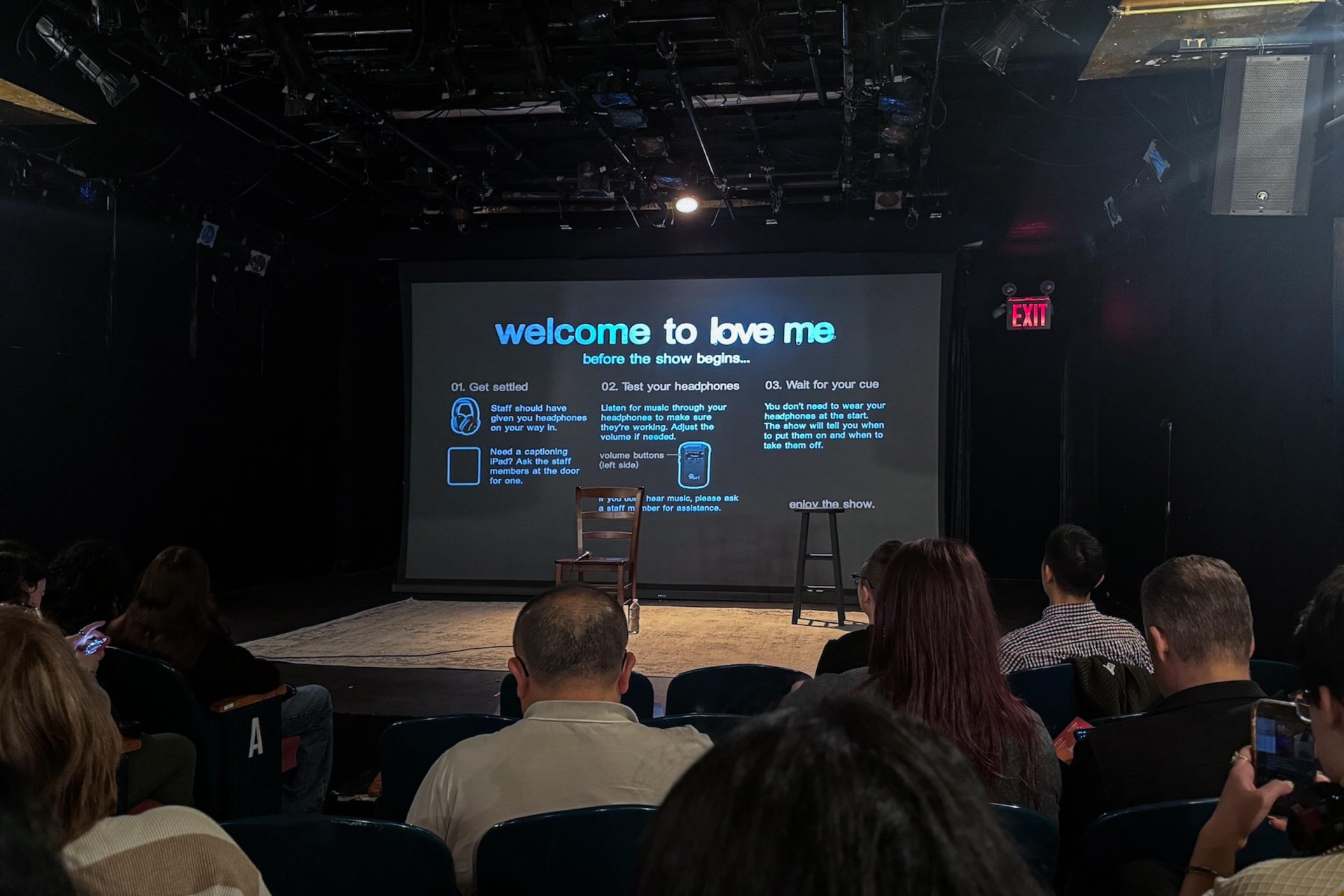
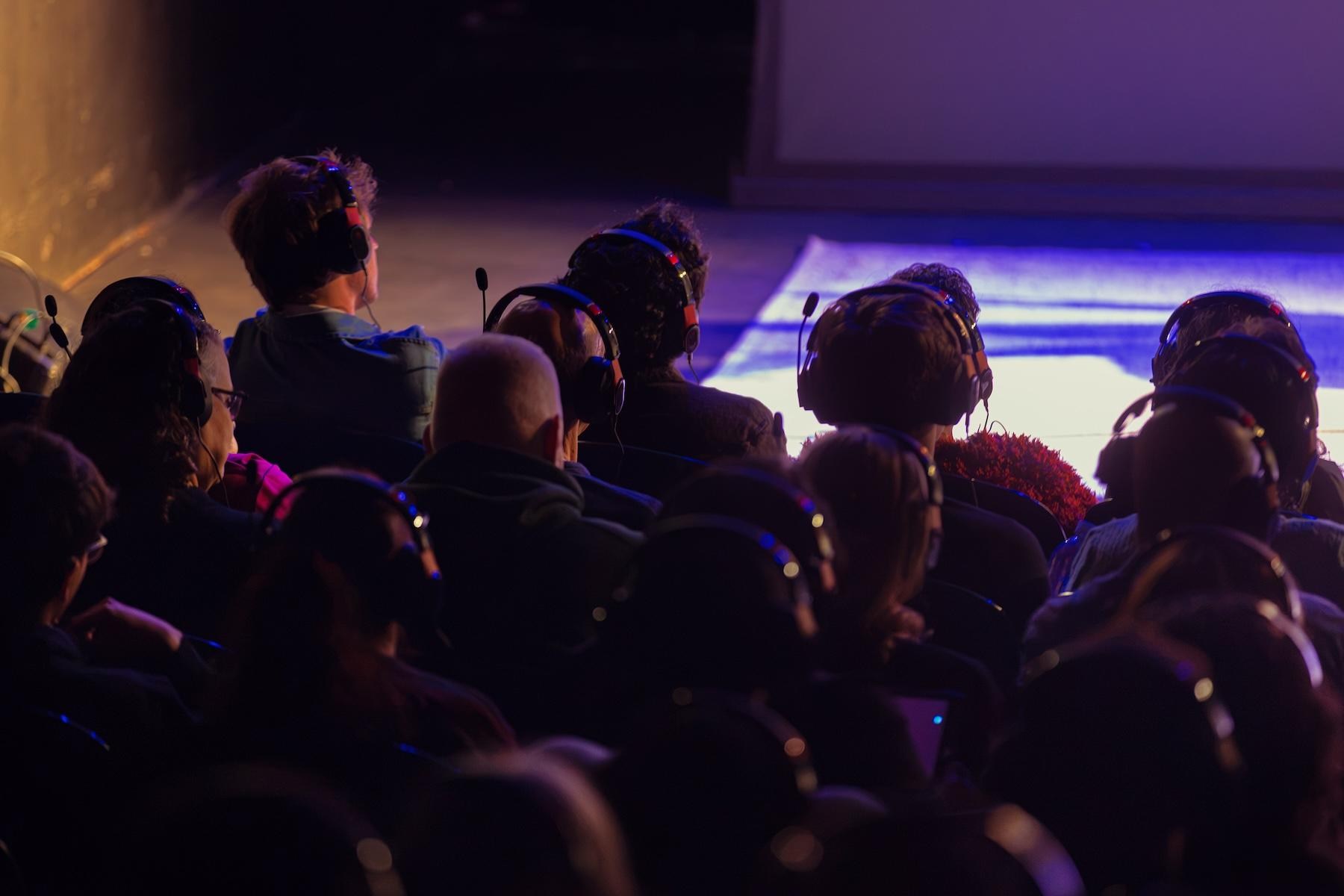
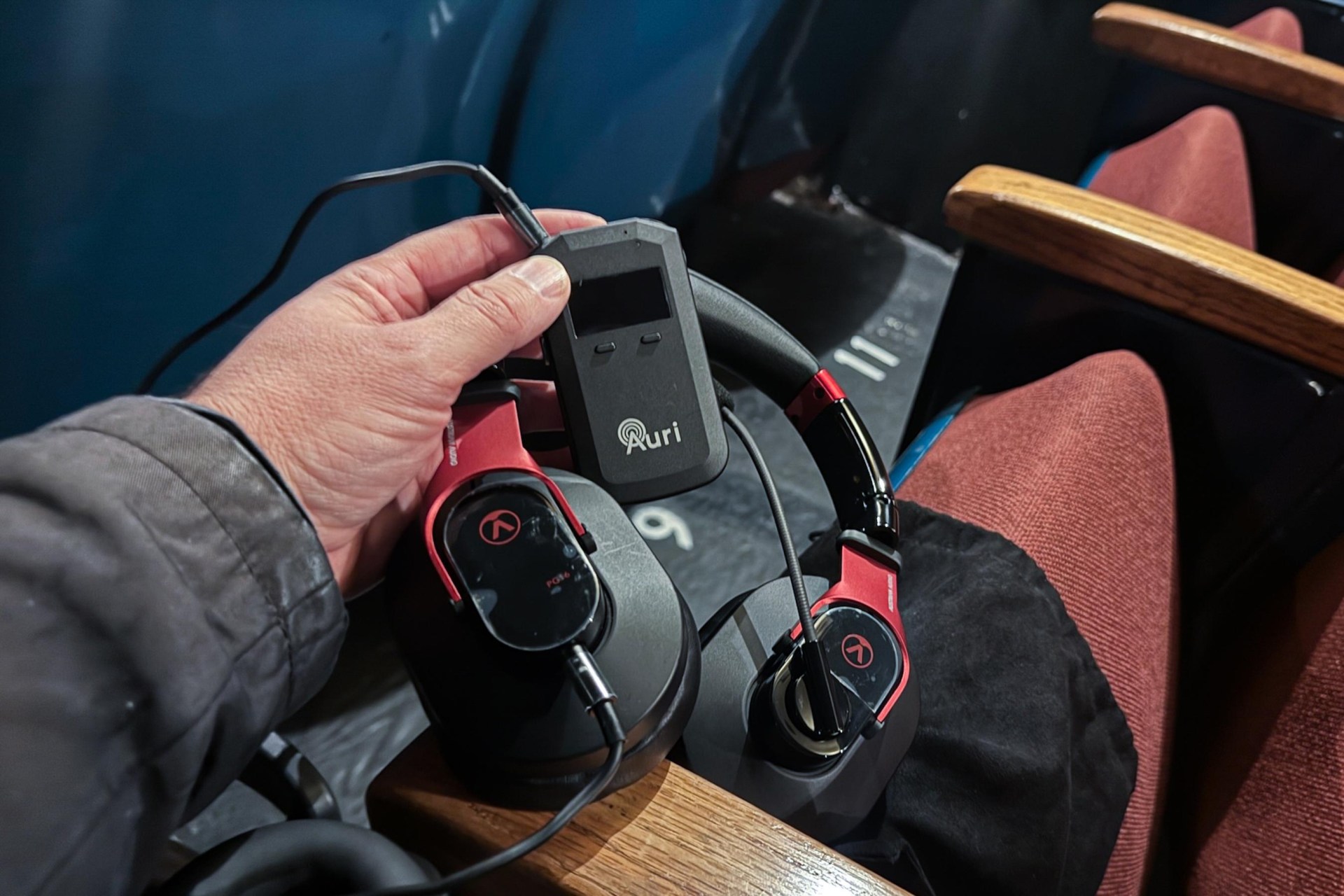
走上几级混凝土台阶,穿过纽约市一栋有200年历史的联排住宅的前门,我跟随人群走进拥有178个座位的SoHo Playhouse。当我们找到座位后,引座员给每人一个黑色抽绳袋,袋子里有一副有线耳机,耳机连接着一个小型Auracast接收器。戏剧开始后不久,我们就被要求戴上它们。
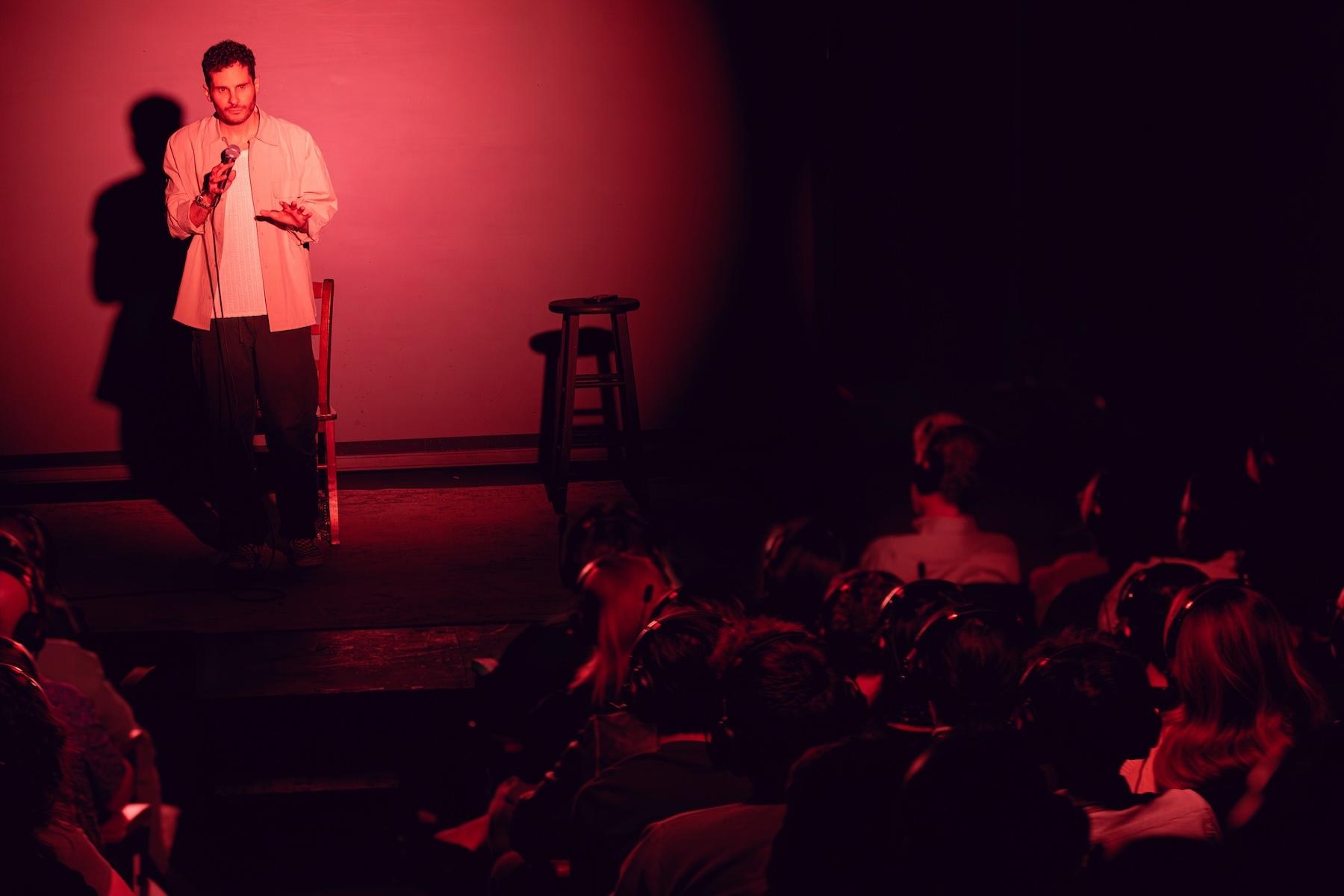
这些耳机是单口喜剧《Love Me》中不可或缺的叙事工具。这部作品由单口喜剧演员、前《周六夜现场》编剧德鲁·迈克尔与导演普拉尚特·文卡塔拉马努贾姆共同创作。它讲述的是关于爱情与建立联系的故事,通过五个章节展现迈克尔生活中的不同人际关系,而这些关系又与他逐渐丧失听力以及自我探索的过程紧密相连。《Love Me》独特的音效设计得益于Auracast技术——这是一种基于蓝牙的技术,能够向周围的多台设备传输高质量音频流。由于该剧跟随迈克尔从童年到成年的成长历程,音效设计师丹尼尔·克卢格将耳机与剧院的扬声器结合使用,创造出传统音响系统无法实现的体验。在各个章节之间的音乐中,会穿插耳鸣声和听力测试音调,作为细微的线索,逐步引导观众理解迈克尔对自己听力丧失的领悟。克卢格还通过不同的音质清晰度来展现这个世界。通过剧院扬声器播放的声音有时会被刻意减弱,再经过耳机的进一步过滤,让观众感受到迈克尔在那些时刻所听到的声音。但有一个声音始终清晰纯净,那就是迈克尔的内心独白,整场演出中都能通过耳机听到。这些内心独白既包括预先录制的音频,也有迈克尔在舞台上通过麦克风与自己对话的实时录音。“只要你能进入我的脑海——耳机里传出的所有声音都会非常清晰,”演出结束后迈克尔对我说道。“我们试图强调,内心世界的吸引力在于它为这个人提供了最高保真度的体验空间,让人感觉更加舒适。”不同的声音来源以及声音处理方式,能够刻意为观众营造出令人困惑的场景。在其中一个场景中,迈克尔正在一家喜剧俱乐部进行单口喜剧表演,三种声音同时存在,争夺观众的注意力:剧院的扬声器播放着观众的反应声(其中包括一个有时声音模糊、有时清晰的捣乱者);他通过耳机收听预先录制的、对观众反应的内心独白;而在舞台上,迈克尔正在表演,他的麦克风声音被压低,这样观众的注意力就集中在他的内心独白上。这是典型的时刻之一,观众必须不断集中精力,才能在声音不清且纷至沓来时弄清楚究竟发生了什么。但最大的冲击出现在一个高潮场景中,这是音效设计一直为之铺垫的环节,这一时刻的呈现还融入了多年来迈克尔的听力测试图谱的视觉元素。“我对自己一直以来所做的一切有了重大领悟——那些认知上的付出,那些我自己都未曾察觉却影响着我生命中每一分钟的劳动,”迈克尔说道。“那是一个非常重要的时刻。”
就在那时,观众被要求取下我们几乎在整个演出过程中都戴着的耳机。当迈克尔意识到自己与听力损失之间的关系,以及听力损失带给他的思维清晰度时,我们在整个演出过程中习以为常的耳机——以及它们带来的那种“重量”——都消失了。这是一个充满情感的时刻,自观看那场演出以来,我多次思考过这一场景。这也引出了最后一部分,迈克尔开始理解自己的聋人身份。“问题不在于失聪本身,而在于对它的否认,”他告诉我。“我的听力目前从未这么差过,但我从未像现在这样对自己有更强的认同感、更实现自我,也从未感觉如此快乐。我认为,将失聪视为一种悲剧、一种缺陷、一种负担,或是某种困扰人的事物,这是一种误解。”
Auracast能够传输音频流,让任意数量的耳机都能接入,这一功能使得《爱我》这个项目成为可能。任何支持Auracast的耳机都能连接到观众广播信号——我带了Nothing Pro 1来测试这一功能,几秒钟内就连接上了观众广播频道——但在表演时,我使用了提供的Auri接收器和Austrian Audio耳机。该演出的音效设计正是考虑到了这些因素,我并不希望Nothing耳机的不同隔音效果影响观众的体验。
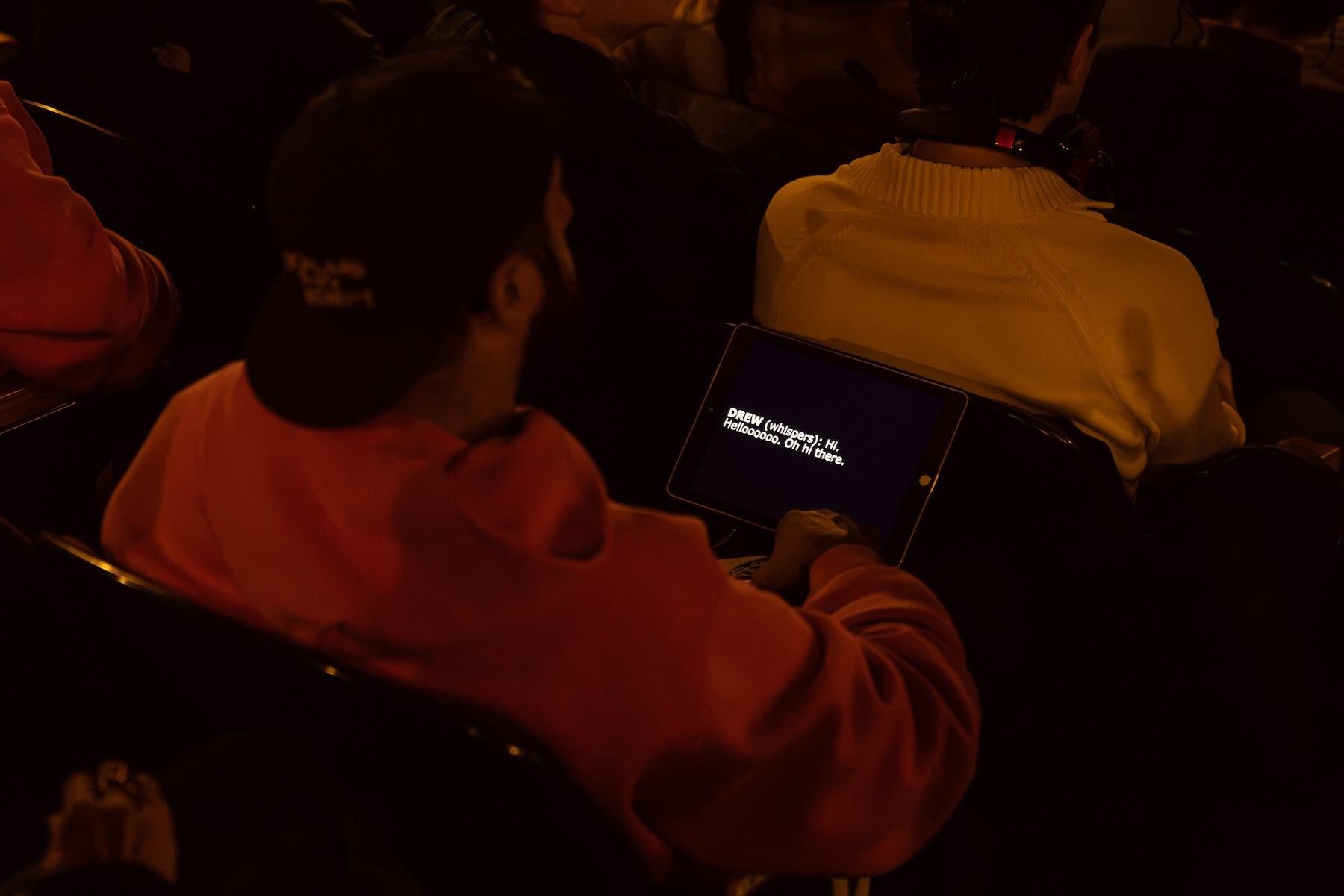
《Love Me》是与Deaf West Theatre合作呈现的,该剧院致力于在戏剧作品中采用以聋人为中心的叙事方式。除了面向普通观众的Auracast直播外,还有专为助听器和人工耳蜗用户设计的直播版本,以适配这些设备的功能,同时也有配备字幕的iPad可供使用。在演出期间,迈克尔通过支持Auracast功能的Phonak Eon Sphere助听器连接到自己的直播频道。“我们曾考虑使用入耳式监听器,但如果使用的话,我就无法从周围环境获取声音放大效果,那样就会与观众失去联系,”迈克尔说。“这些设备兼具两种功能:既是助听器,也是入耳式监听器。”《爱我》借助Auracast技术来讲述它的故事,但这并非关于听力技术的故事。这项技术的作用是展现人与人之间的联系以及自我身份的探索。“我认为目前存在两股相互矛盾的力量——一是与耳聋相关的助听器和听力技术方面,另一则是与耳聋相关的文化身份方面,”迈克尔说道。人工耳蜗和助听器等技术进步被认为是导致聋人学校数量减少的原因之一,这使得聋童被纳入普通公立学校,从而失去了了解聋人历史与文化的机会。“我并不反对技术,”迈克尔说,“我只是认为技术与聋人身份应当是相融合的,而非相互对立的。”正是这种合作使得《Love Me》能够取得如此出色的效果。Auracast技术的应用既是为了提升可及性——就像它已经在其他演出、讲座或广播系统中得到使用一样——也是为了强化这部作品所传达的关于爱、接纳以及认可自身聋人身份的主题。这是一种富有创意的技术运用,承载着强有力的信息。
原文
Up a few concrete steps and through the front door of a 200-year-old row house in New York City, I follow a crowd of people into the 178-seat SoHo Playhouse. As we filter to our seats, ushers hand each person a black drawstring bag with a pair of wired headphones connected to a small Auracast receiver. Then, soon after the play begins, we’re instructed to put them on.
The headphones are an integral storytelling tool of Love Me — a one-man show from the minds of stand-up comedian and former Saturday Night Live writer Drew Michael and director Prashanth Venkataramanujam. It’s a show about love and the bid for connection, told in five chapters about different relationships in Michael’s life, bound by the threads of his hearing loss and self-discovery.
Love Me’s experimental sound design is possible thanks to Auracast, a technology based on Bluetooth that can broadcast a high-quality audio stream to any number of nearby devices. As the show follows Michael from childhood through adulthood, sound designer Daniel Kluger uses the headphones in combination with the theater speakers to create experiences that wouldn’t be possible with a traditional setup. Tinnitus ringing and hearing test tones play in the music between sections as subtle clues as the show builds to Michael’s epiphany about his hearing loss. Kluger also explores the world through varying levels of sonic clarity. Sound playing through the theater’s speakers is sometimes intentionally muffled, which is then further dulled by the headphones, giving the audience a sense of what Michael is hearing in those moments.
But one sound that stays clear and pristine is Michael’s inner monologue, heard in the headphones throughout the show. The inner monologue consists of both prerecorded tracks and the live feed from Michael’s microphone on stage as he talks back and forth with himself. “Any time you’re in my head — anything in the headphones is coming through clearly,” Michael tells me after the show. “[We’re] trying to also highlight that the appeal of the inner world is such that it’s the highest fidelity space for this person. It’s more comfortable.”
The different sound sources and treatments of the sound can lead to intentionally confusing scenes for the audience. During one, where Michael is doing a stand-up set at a comedy club, three sounds compete for attention: The theater speakers play the crowd’s reactions (including a heckler whose voice is sometimes muffled and sometimes clear); his prerecorded inner monologue reacting to the crowd plays in the headphones; and on stage, Michael is performing the set, with his mic muffled so our focus is on his inner monologue. It’s one of the definitive moments where the audience feels the constant concentration necessary to parse what’s happening when sounds aren’t clear and become overwhelming.
But the biggest impact comes during a climactic scene the sound design has been building toward, a realization that also incorporates the visuals of a series of Michael’s audiograms over the years. “I had this massive breakthrough about the whole history of what I’ve been doing — the cognitive labor, the invisible to myself labor that was affecting every single minute of my life,” Michael says. “That was a huge moment.”
That’s when the audience is instructed to remove the headphones we’ve been wearing for nearly the entire show. As Michael comes to the recognition of his relationship with his hearing loss and the clarity of mind that gives him, what we’ve become used to for the entire show’s experience — the headphones — are now gone, as is that literal weight from our heads. It’s an emotional moment, one that I’ve thought about multiple times since seeing the show.
It also leads into the final act, where Michael begins to understand his own Deaf identity. “The deafness is not the culprit, it’s the denial of it.” he tells me. “My hearing currently has never been worse, but I’ve never been more self-affirmed or self-actualized or felt happier in myself. It’s a misconception, I think, about deafness as a tragedy, deafness as a deficit, deafness as a burden, deafness as something that plagues a person.”
The ability of Auracast to broadcast an audio stream that any number of headphones can connect to is what made Love Me a possibility. Any Auracast headphones can connect to the audience broadcast — I brought along the Nothing Pro 1 to test the ability and connected to the audience broadcast channel in seconds — but I used the provided Auri receiver and Austrian Audio headset for the performance. The show’s sound was designed with those in mind, and I didn’t want the differing isolation of the Nothing headphones to affect the intent of the experience.
Love Me is presented in partnership with Deaf West Theatre, which supports Deaf-centered storytelling in theatrical productions. In addition to the audience Auracast feed, there’s one for users of hearing aids and cochlear implants that’s designed for compliance with those devices, and iPads with captions are also available. During the performance, Michael connects to his own broadcast channel with Auracast-enabled Phonak Eon Sphere hearing aids. “We talked about using in-ear monitors, but if I use an in-ear monitor, then I don’t have amplification from my environment, so then I lose contact with the audience,” Michael says. “These function as two things: They’re hearing aids and also in-ear monitors.”
Love Me relies on the Auracast technology to tell its story, but it isn’t a story about hearing technology. The technology is there to tell the story of connection and discovery of identity. “I think right now … there are two things that are at odds — the hearing aid and audiological tech side of deafness and then the cultural identity side of deafness,” Michael says. Technological improvements, like cochlear implants and hearing aids, are cited as one of the reasons schools for the deaf have been on the decline, which leads to kids being mainstreamed (put into regular public schools) and losing out on Deaf history and culture. “I’m not against the tech,” Michael says, “I just think tech and Deaf identity should be a marriage rather than a divide.”
And that collaboration is why Love Me works as well as it does. The Auracast technology is there both for accessibility — in the same way it’s already used in other performances, lectures, or announcement systems — and to uplift the show’s story of love, acceptance, and acknowledgement of one’s own Deaf identity. It’s an inventive use of the technology that carries with it a powerful message.