文化体育
中国成员多于韩国成员:为何K-pop正变得更加多元文化
中文译文
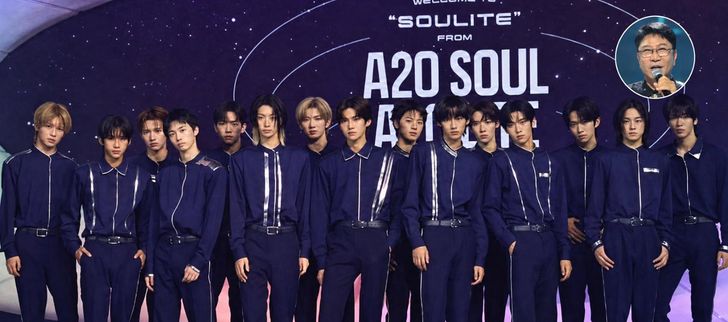
六人。这是制作人李秀满的A2O娱乐公司近期推出的新组合A2O Soul中的中国籍成员人数,李秀满在暂停三年后重返韩国K-pop市场。
该跨国组合共有15名成员,其中中国籍成员占比40%,是所有国籍中比例最高的。包括拥有双重国籍的成员在内,韩国籍成员有5人,占比33.3%。这是首次有在韩国出道的K-pop组合中中国籍成员多于韩国籍成员。
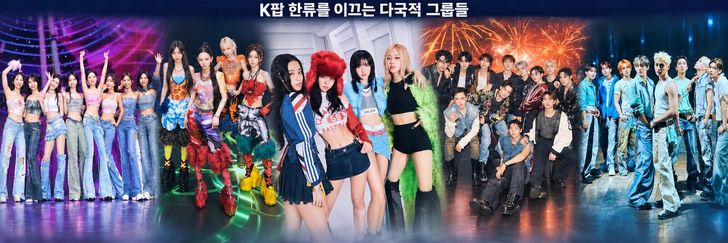
在K-pop领域,跨国组合并非新鲜事物。然而,在那些在韩国出道的组合中,与在海外本地化的组合不同,韩国籍成员通常都是占比最高的国籍群体。
例如,SEVENTEEN有两名中国籍成员,但其13名成员中有10名是韩国人,占比76.9%。TWICE有三名日本籍成员,其9名成员中有5名是韩国人,占比55.6%。2012年出道的TimeZ和2014年出道的UNIQ这两支在韩国 debut的团体,其中国籍成员也多于韩国籍成员。但它们的起源与A2O Soul不同——前者是韩国与中国合作的项目,由中国娱乐机构参与制作和投资,而A2O Soul并非如此。
A2O娱乐的一位官员周二对《韩民族报》表示:“A2O Soul的制作没有中国资本参与。”
那些在韩国 debut的跨国K-pop团体中,韩国籍成员占多数这一常见格局正在发生变化。
尤其值得关注的是,推动这一变化的人正是李秀满。在SM娱乐任职期间,由于中国籍成员离开该公司及其所属组合,李秀满屡次面临困境。2005年随Super Junior出道的韩庚曾起诉SM,要求解除其专属合约。2012年出道的EXO组合的成员,包括鹿晗和陶喆,也离开了组合,并与该公司陷入了法律纠纷。
尽管与中国籍成员存在这些反复的冲突,李秀满仍未改变策略。在他的最新A2O K-pop项目中,他反而招募了大量中国籍成员。
包括与A2O Soul几乎同时在韩国推出的九人组合A2O Light在内,该项目的24名成员中有9名是中国籍。此前在2024年,李秀满还在中国推出了由五名中国籍成员组成的A2O Mei组合。
在经历了中国籍成员接连离开的情况后,他为何又选择招募如此多的中国籍成员?
李秀满为何继续着眼于中国线索在于李氏长期以来对中国市场的渴望。2007年,他在哈佛商学院为学生们做的演讲中指出,中国是“东方好莱坞”诞生的地方。2021年,他在tvN的时事节目《Monthly Connect》中又表示,K-pop制作团队应该进入中国市场。李氏说:“中国有13亿人口,这是一个巨大的市场。我认为我们需要开创一个K-pop制作的新时代,让韩国的制作人直接前往其他国家,与当地人才合作组建组合,让这些组合成为世界顶尖的。我所说的韩国制作人包括朴振英、方时赫以及我自己。”在中国,李氏一直将K-pop全球化愿景的核心放在这里。即便2017年韩国部署美国的高空区域防御系统(THAAD)引发了中国的非正式禁令,禁止韩国文化产品及K-pop演出,也就是人们所熟知的“韩流禁令”,他对中国市场的兴趣依然没有减退。
业内人士认为,尽管存在这些“中国风险”,李氏仍决定招募大量中国成员,这是其针对该市场制定的长期战略的一部分。
“即便存在中国成员离开组合的风险,且韩流禁令依然存在,中国市场依然不容忽视。它是亚洲最大的市场。我认为李氏为A2O K-pop项目积极招募中国成员,是其在华扩大影响力的长期战略。”一位拥有20多年K-pop行业工作经验的制作人说道。“一旦日程被韩国媒体知晓,有时就会突然被取消。不过,仍然可以在中国签订广告合同或举办粉丝见面会。尽管韩流禁令尚未解除,中国依然是K-pop专辑重要的海外市场。中国籍成员对于在该市场创造收入至关重要。这并非仅仅是为了让组合的国籍更加多样化,”另一位担任小型K-pop经纪公司负责人的行业内部人士说道。
K-pop练习生数量减半
然而,K-pop组合中中国籍成员比例的增加并不能仅仅用李氏针对中国市场的策略来解释。这一趋势的背后是国内练习生数量的减少以及娱乐经纪公司经营环境的变化。
得益于BTS和BLACKPINK等组合的全球成功,国际上对K-pop的兴趣达到了前所未有的高度。然而,正在韩国接受训练的K-pop偶像候选人的数量实际上却在下降。根据韩国创意内容振兴院过去五年发布的流行文化与艺术产业调查数据,隶属于K-pop经纪公司的练习生人数从2020年的1,375人降至2024年的613人,减少了762人。这一数字在短短四年内下降了55.4%,练习生总数几乎减半。
去年,24岁的安妮(本名为文瑞允),作为新世界集团董事长李明熙的孙女以及新世界集团董事长郑有庆的长女,作为组合All Day Project的成员出道,引发了广泛关注。
即便是一家商业世家的长女在登上舞台之前也要经历练习生训练,这一事实凸显了K-pop的高地位。然而,练习生行业基层的现实却截然不同。
“他们不想成为名人”:一代人的变化为何在K-pop明星的受欢迎程度创历史新高的情况下,练习生人数却在下降?业内人士指出,这是由于青少年们的职业追求发生了变化。
“如今,孩子们似乎更想成为网红,比如YouTube博主或TikTok创作者,而不是K-pop练习生。练习过程极其艰苦,且需要数年时间。他们还担心,在出道之前就可能因为校园欺凌丑闻或私人生活方面的争议而毁掉自己的职业生涯。网红所面临的审查相对较少,因此压力也较小。我认为,现在有那么多的年轻人渴望成为名人,已不像过去那样了。正因如此,我们公司的人才培养团队也在更多时间放在海外。”某小型K-pop经纪公司的管理人员说道。
K-pop偶像和网红都需要公众的关注来维持生计,但获得这种关注的途径却大相径庭。有志成为偶像的人必须先被娱乐公司选中,然后接受多年的高强度训练,但并不能保证他们一定能出道。相比之下,YouTube创作者和TikTok网红只需一部智能手机就能开启自己的职业生涯。偶像需要得到公司的批准才能登台表演,而网红则可以自己创造表演机会。
成为偶像的出道之路同样漫长且艰辛。据大型K-pop公司的员工透露,练习生通常在工作日从早上9点一直训练到晚上10点。
到达公司后,他们要先上交手机,然后参加英语及其他外语的晨间课程。午饭后,他们要上声乐和舞蹈课,之后还有额外的个人训练时间。
即便付出了如此多的努力,要获得出道机会仍如同大海捞针一般困难。韩裔美国歌手EJAE演唱了网飞动画电影《KPop恶魔猎人》中的歌曲《Golden》,并因此获得格莱美最佳视觉媒体歌曲奖。她曾在SM娱乐公司担任练习生12年,但最终并未在那里出道。
如今的青少年及其父母都很清楚这条道路的艰辛。
“送孩子去当练习生对父母来说也是一种负担。这需要投入大量时间,一旦投入了这么多,中途放弃肯定很困难。想象一下,如果孩子经历了所有准备却仍无法出道,那该有多令人沮丧。有了YouTube或TikTok,他们只要尝试后觉得不合适就可以直接停止,”39岁的李女士说,她有一个7岁的儿子。
“我们让所有男性练习生都离开了”:经纪公司纷纷缩减规模
由于成本上升和财务压力,规模较小的K-pop经纪公司也在减少练习生的数量。关于流行文化与艺术产业的调查显示,娱乐公司培养新艺人的成本日益增加,这是练习生数量急剧下降的主要原因之一。
“我们曾经有五名男练习生,但由于成本过高,我们不得不让他们全部离开。我们决定专注于打造一个女团,目前正在筹备中。投资力度不如从前,盈利能力也有所下降,因此我们别无选择,只能考虑削减开支,”一家小型K-pop经纪公司的经理说道。
尽管K-pop在全球取得了成功,但并非所有娱乐公司都能蓬勃发展。在韩国,那些无力承担培养练习生成本的经纪公司正在缩减业务规模。与此同时,越来越多的青少年选择成为网红,自己创作内容,而非投入数年进行高强度训练。随着海外市场不断扩张,而国内人才培养体系日益薄弱,出现更多外籍成员多于韩国成员的K-pop组合——这种多元文化的逆转——可能是市场环境变化带来的自然结果。
这是市场的自然变化,但谁会上台并非最重要的问题。
真正的问题不在于登上舞台的年轻人的国籍,而在于他们成长和发展的环境。
李氏推出的两个新组合A2O Soul和A2O Light的24名成员平均年龄为15.5岁,其中3名成员仅13岁。
这一年龄比SM、YG和JYP娱乐在2005年至2007年间推出的包括BIGBANG和Girls' Generation在内的5个大型组合的35名成员的平均出道年龄18岁低约2.5岁。近日,《纽约时报》报道称其已获得NewJeans的独家合约,并指出政府制定的标准合约中缺乏旨在保护未成年成员在健康、教育、睡眠及休息方面权益的条款。HYBE则回应称,针对年轻艺人的单独补充协议已包含保护这些权益所需的所有条款。尽管如此,这一争议仍引发了人们对支撑K-pop成功的偶像培训制度的质疑。归根结底,或许比谁有资格登上K-pop舞台更重要的问题是,这些年轻艺人在此之前要承受什么。本文来自《韩国时报》的姊妹报刊《韩国日报》,由生成式AI系统翻译,并经《韩国时报》编辑。
原文
Six. That is the number of Chinese members in A2O Soul, the new group recently launched by producer Lee Soo-man's A2O Entertainment as he returns to Korea's K-pop market after a three-year hiatus.
The multinational group consists of 15 members, with Chinese nationals accounting for 40 percent, the largest share of any nationality. Korean nationals, including those with dual citizenship, make up five members, or 33.3 percent. It is the first time a K-pop group debuting in Korea has more Chinese members than Korean ones.
Multinational groups are nothing new in K-pop. However, among groups debuting in Korea, rather than overseas-localized acts, Korean members have traditionally made up the largest nationality group.
Seventeen, for example, has two Chinese members, but 10 of its 13 members (76.9 percent) are Korean. Twice, which has three Japanese members, has five Koreans out of nine members (55.6 percent).
Two groups that debuted in Korea, TimeZ in 2012 and UNIQ in 2014, also had more Chinese than Korean members. But their origins were different from those of A2O Soul. Both were joint Korea-China projects involving Chinese entertainment agencies in production and investment. A2O Soul is not.
An A2O Entertainment official told Hankook Ilbo on Tuesday that "no Chinese capital was invested in the production of A2O Soul."
The familiar makeup of multinational K-pop groups debuting in Korea, in which Korean members formed the largest nationality group, is beginning to change.
What makes this development particularly noteworthy is that the person behind it is Lee Soo-man.
During his tenure at SM Entertainment, Lee faced repeated difficulties as Chinese members left the agency and their groups. Han Geng, who debuted with Super Junior in 2005, filed a lawsuit against SM seeking to invalidate his exclusive contract. Members of EXO, which debuted in 2012, including Luhan and Tao, also left the group and became embroiled in legal disputes with the agency.
Despite these repeated conflicts with Chinese members, Lee has not changed course. In his latest A2O K-pop project, he has instead recruited a large number of Chinese nationals.
Including A2O Light, a nine-member group introduced in South Korea around the same time as A2O Soul, Chinese members account for nine of the project's 24 members. Earlier, in 2024, Lee introduced A2O Mei, a group consisting of five Chinese members, in China.
Having experienced the successive departures of Chinese members, why has he chosen to recruit so many of them again?
Why Lee continues to look to China
A clue lies in Lee's long-standing ambition for the Chinese market.
In a 2007 lecture to students at Harvard Business School, he identified China as the place where a "Hollywood of the East" could emerge. He also named China as a market K-pop producers should enter during an appearance on tvN's current affairs program "Monthly Connect" in 2021.
"China has a population of 1.3 billion. It's an enormous market. I believe we need to create an era of K-pop production in which producers from Korea go directly to other countries, work with local talent to form groups and make them No. 1 in the world. I'm talking about Korean producers such as J.Y. Park, Bang Si-hyuk and myself," Lee said.
China has long been central to Lee's vision of K-pop's globalization. Even after South Korea's 2017 deployment of the U.S. Terminal High Altitude Area Defense (THAAD) system triggered China's unofficial ban on Korean cultural content and K-pop performances, widely known as the "Korean wave ban," his interest in the Chinese market did not wane.
Industry insiders interpret Lee's decision to recruit a large number of Chinese members despite these "China risks" as part of a long-term strategy targeting the market.
"Even with the risk of Chinese members leaving their groups and the Hallyu ban still in place, the Chinese market cannot be ignored. It's the largest market in Asia. I see Lee's active recruitment of Chinese members for the A2O K-pop project as a long-term strategy to expand his influence in China," said one producer who has worked in K-pop for more than 20 years.
"Schedules sometimes get suddenly canceled once they become known to the Korean media. Still, it's possible to sign advertising contracts or hold fan meetings locally in China. Although the Hallyu ban has not been lifted, China remains a major overseas market for K-pop albums. Chinese members are essential for generating revenue there. It's not simply about diversifying the nationalities in a group," said another industry insider who is the head of a small K-pop agency.
K-pop trainee numbers cut in half
However, the growing presence of Chinese members in K-pop cannot be explained solely by Lee's strategy for the Chinese market. Behind the trend are a shrinking domestic trainee pool and changing business conditions for entertainment agencies.
Thanks to the global success of groups such as BTS and BLACKPINK, interest in K-pop has never been stronger internationally. Yet the number of aspiring K-pop idols training in Korea is actually declining.
According to the Korea Creative Content Agency's Survey on the Popular Culture and Arts Industry, released over the past five years, the number of trainees affiliated with K-pop agencies fell from 1,375 in 2020 to 613 in 2024, a decrease of 762. The figure dropped by 55.4 percent in just four years, effectively halving the trainee pool.
Last year, 24-year-old Annie (whose legal name is Moon Seo-yoon), the granddaughter of Shinsegae Group Chairwoman Lee Myung-hee and eldest daughter of Shinsegae Chairwoman Chung Yoo-kyung, made headlines when she debuted as a member of the group All Day Project.
The fact that even the eldest daughter of a business dynasty went through the trainee system before taking the stage underscored K-pop's elevated status. But the reality at the grassroots level of the trainee industry was quite different.
'They don't want to become celebrities': A changing generation
Why are trainee numbers falling when K-pop stars are more popular than ever? Industry insiders point to changing career aspirations among teenagers.
"These days, kids seem more interested in becoming influencers, such as YouTubers or TikTokers, than K-pop trainees. Training is grueling and takes years. They also worry that even before debuting, their careers could be ruined by a school bullying scandal or controversy over their private lives. Influencers face relatively less scrutiny, so there's less pressure. I don't think as many young people aspire to become celebrities as they once did. That's why our agency's talent development team is also spending more time overseas," said an executive at a small K-pop agency.
Both K-pop idols and influencers depend on public attention for their livelihoods. But the paths to gaining that attention are very different.
Aspiring idols must be selected by an entertainment agency and undergo years of intensive training, with no guarantee that they will ever debut. YouTubers and TikTokers, by contrast, can launch their careers with nothing more than a smartphone. While idols need an agency's approval to take the stage, influencers can create their own.
The road to an idol debut is also long and grueling. According to accounts from officials at major K-pop agencies, trainees typically attend classes and practice from 9 a.m. to 10 p.m. on weekdays.
When they arrive at their agencies, they hand over their mobile phones before taking morning classes in English and other foreign languages. After lunch, they attend vocal and dance lessons, followed by additional individual practice sessions.
Even after all that effort, securing a debut opportunity is like finding a needle in a haystack.
Korean American singer EJAE, who performed "Golden," a song featured in Netflix's animated film "KPop Demon Hunters" and won a Grammy Award for Best Song Written for Visual Media, spent 12 years as an SM Entertainment trainee but never made her debut there.
Today's teenagers and their parents are well aware of how arduous this journey can be.
"Sending a child to become a trainee is a burden for parents, too. It requires a huge investment of time, and once you've invested so much, it must be difficult to quit halfway through. Imagine how devastating it would be for a child to go through all that preparation and still fail to debut. With YouTube or TikTok, they can simply stop if they try it and decide it's not for them," said Lee, 39, the mother of a 7-year-old boy.
'We let all our male trainees go': Agencies on downsizing trend
Smaller K-pop agencies are also reducing the number of trainees because of rising costs and financial pressures.
The Survey on the Popular Culture and Arts Industry identified the growing cost burden of training aspiring artists on entertainment agencies as one of the main reasons for the sharp decline in trainee numbers.
"We had five male trainees, but we let all of them go because the costs were substantial. We decided to concentrate on producing a girl group that we're currently preparing. Investment is not as active as it used to be, and profitability has declined, so we have no choice but to think about cutting expenses," said a manager at a small K-pop agency.
K-pop's global success does not mean every entertainment agency is thriving. In Korea, agencies that can no longer afford the costs of developing trainees are scaling back. Meanwhile, more teenagers are gravitating toward becoming influencers, creating their own content rather than committing to years of intensive training.
As overseas markets expand while the domestic talent-development pipeline weakens, the emergence of more K-pop groups with foreign members than Korean ones — a multicultural reversal — may be a natural consequence of changing market conditions.
A natural market shift, but who gets onstage is not the most important question
The real issue is not the nationality of the young people taking the stage, but the conditions in which they grow and develop.
The average age of the 24 members of A2O Soul and A2O Light, the two new groups introduced by Lee, is 15.5. Three members are just 13 years old.
That is about 2.5 years younger than the average debut age of 18 among 35 members of five major groups launched by SM, YG and JYP Entertainment between 2005 and 2007, including BIGBANG and Girls' Generation.
Recently, The New York Times reported that it had obtained NewJeans' exclusive contract and alleged that it lacked provisions in the government's standard contract designed to protect underage members' rights to health, education, sleep and rest.
HYBE countered that a separate supplementary agreement for young artists included all the provisions necessary to protect these rights. Nevertheless, the controversy has renewed questions about the idol training system that has underpinned K-pop's success.
Ultimately, perhaps a more important question than who gets to stand on the K-pop stage is what young performers have to endure before they get there.
This article from the Hankook Ilbo, the sister publication of The Korea Times, is translated by a generative AI system and edited by The Korea Times.