科技
多年后,水星迎来首位访客,两艘航天器进入其轨道。
中文译文
佛罗里达州卡纳维拉尔角(美联社)——在经过八年的内太阳系航行,旨在揭开这颗最小行星的诸多谜团之后,两艘航天器于周六进入水星轨道。
这两艘相连的机器人探测器——一艘来自欧洲,另一艘来自日本——将于下月分离,以便从不同高度对这颗酷热的小行星进行测绘和研究。这项耗资20亿美元(17亿欧元)的任务被统称为“贝皮科伦坡”任务。
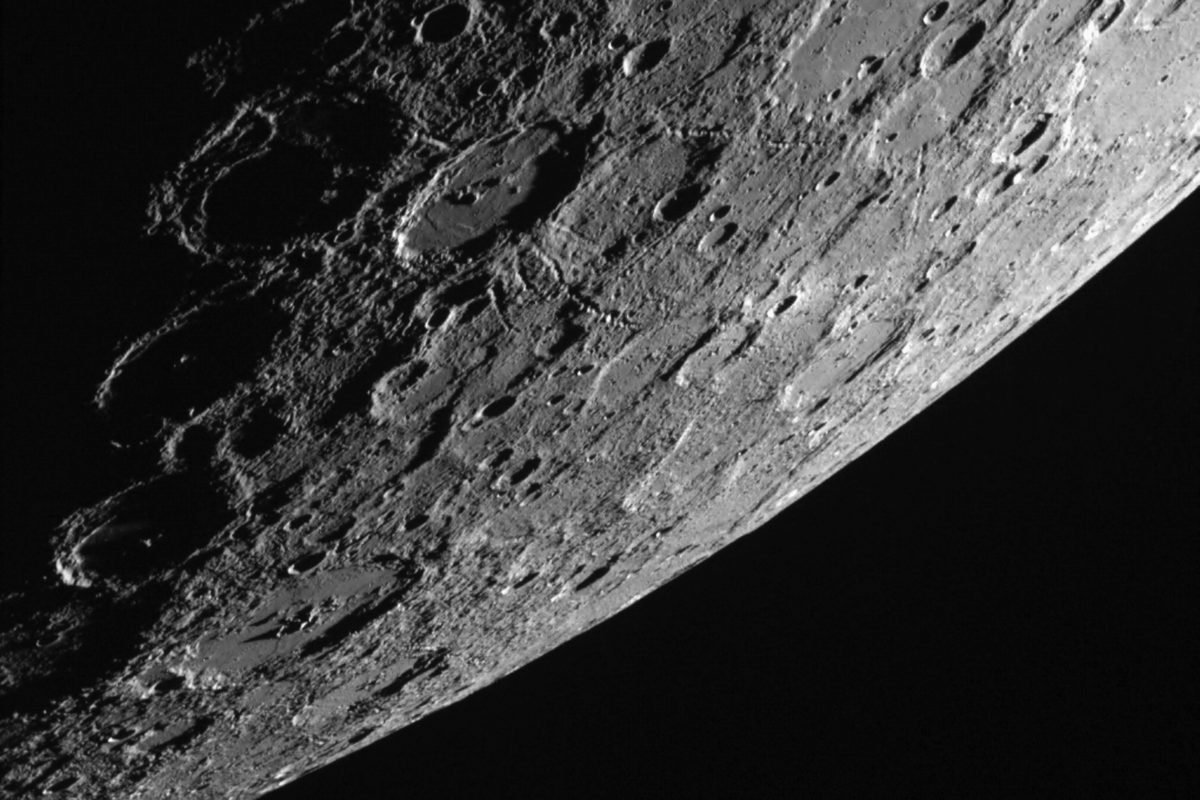
欧洲航天局通过社交媒体宣布了“贝皮科伦坡”任务的成功入轨。一系列推进器点火操作使航天器速度降低,从而能够被水星微弱的引力捕获。但在9400万英里(1.52亿公里)外的德国,飞行控制人员经过数小时的紧张等待才确认“贝皮科伦坡”已成功进入轨道。各团队仔细分析了传回的数据;目前尚无更多信息。“贝皮科伦坡号”是第三艘造访水星的航天器——水星是距离太阳最近的行星,其大小仅略大于我们的月球——同时也是十多年来第一艘造访水星的航天器。
美国国家航空航天局的“水手10号”在20世纪70年代中期曾三次飞掠水星。该任务团队中包括已故的意大利数学家朱塞佩·“贝皮”·科伦坡,这艘最新的航天器便是以他的名字命名的。美国国家航空航天局的“信使号”航天器于2011年进入水星轨道,由于燃料耗尽,于2015年坠毁在水星表面。
“贝皮科伦坡号”于2018年发射,它选择了更为缓慢且迂回的路线前往水星,途中先飞掠地球一次、金星两次,还多次飞掠水星以利用其引力辅助导航。所有这些绕行使得航天器的飞行距离超过了60亿英里(100亿公里)。在9月,这两艘组合在一起的航天器分离,开始了旅程的最后阶段。
观看:宇航员谈在国际空间站的生活项目首席科学家杰兰特·琼斯表示,他和其他人迫不及待地希望春季时所有新数据能够开始传回。他指出,这项任务将使得人们能够对比“两艘航天器同时在该行星上进行的前所未有的测量数据”。
一旦分别进入轨道,欧洲航天局的卫星和日本宇宙航空研究开发机构的较小型航天器将研究水星的致密内部结构、外部磁场,以及其间的一切:撞击坑、火山平原、山脊,还有高达3英里(4.5公里)的峰顶。
水星表面的温度可超过800度(427摄氏度),这会给电子系统和工程系统带来巨大压力。航天局官员希望让这项任务至少持续一个地球年——相当于四个水星年。
“航天器及其仪器需要尽可能保持低温,这本身就是一个巨大的技术挑战,”琼斯在一封电子邮件中说道。尽管水星与地球的距离相对较近,但它仍是太阳系中探索最少的行星之一。只有外行星天王星和海王星的探测次数更少——上世纪80年代仅有一艘“旅行者2号”探测器到访过它们。
美联社的健康与科学报道得到了AP新闻基金及一些私人基金会的财政支持。所有内容均由美联社独立负责。如需了解美联社与慈善机构合作的标准、支持者名单以及资助报道领域,请访问AP.org。
原文
CAPE CANAVERAL, Fla. (AP) — A pair of spacecraft slipped into orbit around Mercury on Saturday after an eight-year cruise through the inner solar system to unravel our littlest planet's mountain of mysteries.
The linked robotic explorers — one European, the other Japanese — will separate from one another next month in order to map and study the scorching little planet from different altitudes. The $2 billion (1.7 billion euros) mission is known collectively as BepiColombo.
The European Space Agency announced BepiColombo's arrival via social media. A series of thruster firings slowed the spacecraft enough to be captured by the planet's weak gravity. But it took several anxious hours before flight controllers in Germany — 94 million miles (152 million kilometers) away — could confirm that BepiColombo had achieved orbit. Teams pored over the data streaming back; additional information was not immediately available.
BepiColombo is only the third spacecraft to visit Mercury — the sun's closest planet and barely bigger than our moon — and the first in more than a decade.
NASA's Mariner 10 flew past Mercury three times in the mid-1970s. The team included the late Italian mathematician Giuseppe "Bepi" Colombo, for whom this latest mission is named. NASA's Messenger spacecraft entered orbit around Mercury in 2011 and, after running out of fuel, crashed into the planet in 2015.
Launched in 2018, BepiColombo took a slower, more roundabout route to get to Mercury, flying once past Earth, twice past Venus and six times past Mercury for gravity-guiding assists. All those loop-de-loops put more than 6 billion miles (10 billion kilometers) on the odometer. The conjoined spacecraft shed their mother ship in September for the final leg of the journey.
WATCH: Astronauts reflect on living aboard the International Space Station
Lead project scientist Geraint Jones said he and others can't wait for all the new data to start streaming down in the spring. The mission will provide the ability to compare "unprecedented measurements taken by two spacecraft at the planet at the same time," he noted.
Once orbiting separately, the European Space Agency's satellite and the Japan Aerospace Exploration Agency's smaller craft will study Mercury's dense interior and exterior magnetic field, as well as everything in between: impact craters, volcanic plains, mountain ridges and peaks jutting as high as 3 miles (4 1/2 kilometers).
The mercury at Mercury can hit more than 800 degrees (427 degrees Celsius), adding strain to electronic and engineering systems. Space agency officials want to keep the mission going for at least one Earth year — or the equivalent of four Mercury years.
"The spacecraft and its instruments need to be kept as cool as possible, which is a huge technical challenge in itself," Jones said in an email.
Despite its relative proximity to Earth, Mercury is one of the solar system's least explored planets. Only outer planets Uranus and Neptune have had fewer visitors — a lone Voyager 2 back in the 1980s.
The Associated Press' health and science coverage receives financial support from the AP Fund for Journalism and private foundations. AP is solely responsible for all content. Find AP's standards for working with philanthropies, a list of supporters and funded coverage areas at AP.org.