社会民生
“六七例,或许还有更多本可避免的死亡”:昆士兰州自由国家党因医疗体系崩溃面临问责
中文译文
在昆士兰州另一轮议会会议周开始时,又有匿名消息不断传出,这次是针对该州工党领袖史蒂文·迈尔斯的负面背景信息。对于关注昆士兰州政治的人来说,迈尔斯似乎仍因两年前的选举失利而心有余悸,作为反对党领袖他一直难以站稳脚跟,这并不算什么意外消息。许多人不明白,在2024年该党遭遇惨败后,他为何还想要继续留任。工党内部的一些人则向愿意听的人透露,这位前州长作为领导人的任期将在圣诞节前的几周内结束。然而,这一周的议会会议结束时,反对党重新振作,而自由国家党政府则陷入困境。这个曾经看似不可动摇的政府,如今不得不应对自己正在管理着一个功能失调的医疗体系的舆论压力。如今已执政两年多的政府终于不得不为自己曾承诺要修复的医疗系统承担起责任;它似乎再也无法将昆士兰州医疗系统导致七人死亡的一系列失误合理地归咎于前工党政府。
到本周结束时,议会获悉在过去三周里有六人在等待救护车时死亡。其中一名男子等待了七小时,另一名则等待了三小时。他们都被判定为急需救治的紧急病例。
还有一名男子在因心理健康问题自行前往查尔斯王子医院急诊科就诊后自杀。医护人员花了三小时才找到他。
点击此处订阅《卫报澳大利亚》的政治类时事通讯。
卫生部长蒂姆·尼科尔斯是一位经验丰富的专业人士,拥有20年的从业经验,举止如同高薪律师一般,他曾带领自由国家党在2017年赢得选举。
但他难以应对议会方面的猛烈质问。针对工党议员、前护士乔·凯利关于11月3日晚上——即一名男子在汤斯维尔等待救护车时死亡的那个晚上——有多少辆救护车停在接驳坡道上的问题,尼科尔斯首先批评了该问题的“琐碎性”。
“接下来还会问什么?他们是要问我救护车后面的燃油量是多少吗?”他回应道。
“那晚汤斯维尔大学医院并没有救护车停在接驳坡道上,”他最后说道。
但那是错误的。
“很高兴能够为议院澄清这一事实,”两个问题之后他说道。
“据我所知,当时有四辆救护车停在接驳坡道上等待卸载病人。情况就是如此。”尼科尔斯将责任推给联邦政府、前工党州政府及其所谓的“十年衰落”——这是政府议员们不断重复的论调;他还指责医院不堪重负,里面住满了“被遗忘的澳大利亚人”,这个术语指的是那些因缺乏联邦资助的养老院而不得不留在公立医院里的退休人员。
工党不断逼问他:他是否会与遇难者家属见面?
他的回答既不是完全的“不”,也不是“是”。
对于一个基于针对犯罪受害者悲痛情绪作出反应的策略而建立的政府来说——其前提是,对任何悲剧的犹豫不决的反应都会显得缺乏说服力——这无疑是一场截然不同的情感斗争。
到了周三,尼科尔斯参加了与州长大卫·克里斯阿富利、卫生部门总干事大卫·罗森格伦以及救护车服务专员克雷格·埃默里举行的紧急会议。次日,在又一次激烈的质询环节之后,他召开了新闻发布会。他拿着那个标有“工党在医疗领域的失误”字样的旧文件夹,坚称自己要为确保下属履行职责负责。“我认为,作为部长,人们会期望我让部门主管和专员为他们提供的服务负责,并要求他们给出答案,”他说。“因此,我向专员咨询了他们正在采取的措施、为解决这一问题做了什么以及问题的根本原因。”尼科尔斯表示,公众可以信任三零急救系统及急救人员,并承诺会根据部门建议,投入所需资金。“和所有昆士兰人一样,我对服务提供情况也有疑问,因为社区里任何一起意外的死亡都是不可接受的,”他说。“所有可用的车辆都在路上。但问题在于床位实在不够。”
10分钟后,还有许多问题未能提出,他便突然离开,看上去更像是一位传统的昆士兰州卫生部长,而非本届自由国家党内阁中的任何一位。
随后迈尔斯走上麦克风前。在报纸上持续数天的领导权猜测——这些猜测是政府故意且恶意煽动的——之下,这位前卫生部长如今有了更为坚实的基础。
“我从未见过如此多昆士兰州民众因可预防的病因而等待救护车数小时,最终却在救护车到来之前死去,”迈尔斯说道。
“六例、七例,或许更多可预防的死亡。”
“情况越来越糟糕,这是有史以来最严重的状况。”
迈尔斯仍拥有大多数工党议员的广泛好感,但民意调查的结果已让大多数人无法忽视。一些人认为他只是攻击力度不够,另一些人则认为他攻击得还不够多。迈尔斯选择主动出击,这究竟是一位已无什么可失去的反对党领袖,在政治生涯的最后时刻决定奋勇一搏的表现,还有待观察。
有一点是肯定的。在过去的两年里,反对党几乎从未展现出存在感,而本周,昆士兰的政坛局势终于出现了一场势均力敌的较量。
安德鲁·梅森杰是《卫报澳大利亚》昆士兰分社的州级记者。
原文
At the beginning of another Queensland parliamentary sitting week, anonymous sources were out in force, this time background briefing against the state’s Labor leader, Steven Miles.
It is no great revelation to observers of Queensland politics that Miles, still seemingly bruised from his election loss two years ago, has struggled to find his feet as opposition leader. Many wondered why he wanted to stay on after the party’s drubbing in 2024. Some of Labor’s factional whisperers were telling anyone who would listen that the former premier’s leadership would come to an end in the weeks before Christmas.
However, the week in parliament has ended with a revitalised opposition and a wounded LNP government. A government that has for so long seemed untouchable. A government that has now been left battling the perception that it is overseeing a broken health system.
And a government – now in office for more than two years – finally forced to take responsibility for systems it had promised to repair; seemingly no longer able to legitimately blame the former Labor government for the litany of mistakes that led to the deaths of seven people in the care of Queensland’s health system.
By the end of the week, parliament heard six people had died waiting for an ambulance in the last three weeks. One man had waited seven hours, another three. All were triaged as urgently in need of attention.
Another man had taken his own life in the emergency department of the Prince Charles hospital after self-admitting for mental health treatment. It took staff three hours to find him.
Sign up for Guardian Australia’s Politics, really newsletter here
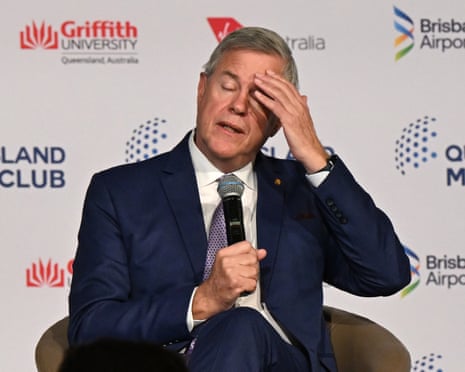
The health minister, Tim Nicholls, is a professional, a 20-year veteran, with the bearing of a well-paid barrister, who led the LNP to an election in 2017.
But he struggled to cope with the parliamentary barrage.
In response to a question from Labor’s Joe Kelly, a former nurse, about how many ambulances had been ramped on 3 November, the night a man died while waiting for one in Townsville, Nicholls first criticised the question’s “pettiness”.
“What next? Are they going to ask me what the level of fuel was in the back of the ambulances?” he responded.
“There was no ramping overnight at the Townsville University hospital that night,” he finished.
But that was wrong.
“I am very pleased to be able to correct the record for the purposes of the house,” he said, two questions later.
“There were at that time four ambulances, as I understand it, on the ramp waiting to off-load. That was the situation there.”
Nicholls threw the blame at the federal government, at the former Labor state government and its “decade of decline”, a phrase repeated endlessly by government MPs, at overwhelmed hospitals full of “forgotten Australians”, a term used to refer to retirees warehoused in public hospitals for lack of a federally funded retirement home to put them in.
Endlessly, Labor hounded him: would he meet the families of the dead?
The answer was not quite no, but never yes either.
For a government built on a small-target strategy based on responding to the grief of victims of crime – predicated on the fact that any indecisive response to a tragedy would be an inherently unconvincing one – this was a completely different emotional battle.
By Wednesday, Nicholls was attending an emergency meeting with the premier, David Crisafulli, the health department director general, David Rosengren, and the ambulance service commissioner, Craig Emery.
The next day, after another bruising question time, he called a press conference.
Bearing his well-worn years-old folder labelled “LABOR’S HOSPITAL FAILURES”, he insisted that he was taking responsibility – for making sure his subordinates were doing their jobs.
“I think people would expect that, as the minister, I hold the DG and the commissioner responsible for the services that they deliver, and I seek answers to questions,” he said.
“So I sought advice from the commissioner about the steps that they were taking, what was being done to address the need, what was the root cause of the problem.”
Nicholls said the community could have confidence in the triple-zero system and paramedics, promising to reinvest whatever it was he needed to, on advice from his department.
“Like all Queenslanders, I do have questions regarding the delivery of services because one death that’s unexpected in the community is one too many,” he said.
“Every available vehicle is on the road. But the issue is there are simply not enough beds.”
After 10 minutes, with many more questions unasked, he abruptly walked off, looking more like a traditional Queensland health minister than any in the LNP cabinet have this term.
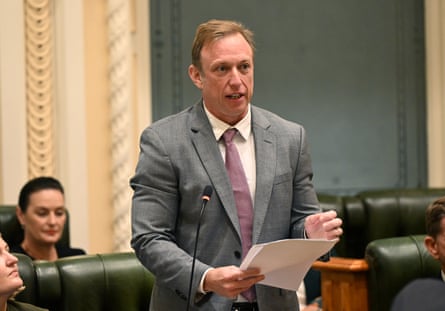
Then Miles stepped up to the microphone. After days of leadership speculation in newspapers – which has been deliberately and mischievously fanned by the government – the former health minister was on much more solid ground.
“I have never before seen so many preventable deaths of Queenslanders left waiting hours for an ambulance to arrive, only to die before it does,” Miles said.
“Six, seven, maybe more preventable deaths.
“It is only getting worse and worse. The worst that it’s ever been.”
Miles retains significant goodwill from most Labor MPs, but the polls have become hard for most to ignore. Some think he’s simply failed to land enough punches. Others that he hasn’t thrown nearly enough.
It remains to be seen whether Miles’s decision to come out swinging was the act of an opposition leader with nothing to lose, deciding to fight at five minutes to midnight in his political career.
One thing is certain. After two years in which the opposition has rarely felt relevant, this week Queensland politics finally felt like a fair fight.
Andrew Messenger is a state reporter in Guardian Australia’s Queensland office