国际政治代表报道
各国为应对日益严重的全球变暖而苦苦挣扎,气候谈判进入加时阶段
中文译文
土耳其安塔利亚——随着谈判代表们在周六加班努力就全球变暖问题达成最终协议,工作人员正在为今年在土耳其举行的联合国气候谈判场地做最后准备。不过,人们对于进一步讨论能否产生减少化石燃料使用的具体计划并不抱太大希望。
此次额外的谈判日是在为期两周的年度峰会,即COP31,因最终协议草案中未提及化石燃料而遭到强烈批评之后召开的。该文件旨在探讨世界应如何应对导致热浪、洪水及其他灾害的气候变化问题。
专家们表示,为避免气候变暖带来的最严重后果,世界亟需大幅减少煤炭、石油和天然气的使用所带来的排放。在周六寄给本届会议的共同主办国土耳其和澳大利亚的一封信中,100个民间社会组织警告称,他们“很可能将主持联合国有史以来最令人失望的COP会议之一”。信中称,现在只剩下几小时的时间“来避免这次COP会议成为三十年来气候谈判的最低谷”。
在这些谈判即将开始之际,联合国宣布,全球气温上升幅度很可能会超过2015年《巴黎协定》设定的将升温控制在比工业化前水平高1.5摄氏度(2.7华氏度)的目标。
“没人知道幕后发生了什么,也不知道COP31的最终结果会如何,”国际行动援助组织的气候正义全球负责人特蕾莎·安德森说。
气候谈判进入加时阶段
在COP31会场被称为展馆的区域里,各国正在展示创新成果并举办研讨会,而周六时,有人看到工作人员正在收拾电子设备并将物品装箱。原本挤满数万名参与者的走廊里如今几乎空无一人,只有少数保安在废弃的展馆旁拍照。
“COP31的局势十分严峻,食物和水资源日益匮乏,而此前那些令人失望的声明之后仍毫无进展的迹象,”身处地中海沿海城市安塔利亚会议现场的忧思科学家联盟的雷切尔·克利图斯说道。
在峰会早些时候,非营利组织“气候行动追踪器”警告称,过去五年中,在减缓全球变暖方面的进展已经停滞,与此同时,包括今年欧洲的热浪和尼泊尔的洪水在内的各种灾害正变得越来越致命。
那些最易受气候变化影响的国家,尤其是那些土地因海平面上升而遭受破坏的小岛国家,也呼吁那些造成气候危机的富裕国家为联合国相关基金提供更多资金,以帮助它们从灾害中恢复并适应更温暖的世界。“似乎每年,对民间社会、原住民以及那些更易受气候影响的国家,不满情绪、不信任感与挫败感都在加剧,”图瓦卢环境部长梅娜·塔利亚在周六的新闻发布会上说道。
“我仍在坚持,试图保持乐观,直到看到最终文本,”他说。
作为主要污染国及全球最大经济体,美国并未直接参与今年的谈判。
下一届气候峰会将于2027年11月在埃塞俄比亚首都亚的斯亚贝巴举行。
对COP31的批评日益增多
周五,一名脖子上戴着红色绞索、身上穿着印有“你们正在扼杀未来”标语的背心的抗议者爬上桌子,大声喊叫,打断了正式会议进程:“你们淘汰化石燃料,却让全球气温上升1.5摄氏度。没有资金支持。现在就杀了我吧。全球南方已经等不及了。”“全球南方”并非一个地理术语,而是对发展中国家的一种统称。当那名抗议者被安保人员带离时,他大声喊道:“你们什么都不做,真的什么都不做。现在就杀了我吧,现在就杀了我!”
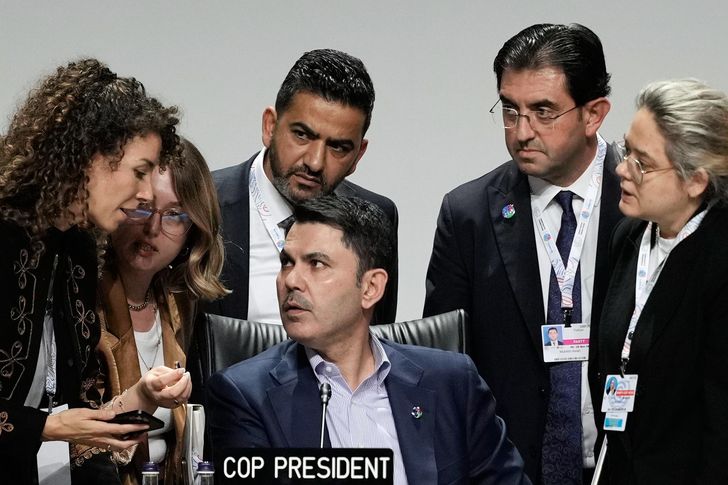
这场示威打断了土耳其环境部长兼COP31联合主席穆拉特·库鲁姆的讲话,他称“让我们努力维持会场内的和平”,随后继续进行原定的发言。
“昨天,这里当然热闹非凡,而今天却几乎空无一人。但所有关键的谈判代表都在这里,民间社会也在场,关注着谈判的进展,”曾参加过18次气候峰会的化石燃料条约倡议组织战略顾问哈吉特·辛格说道。
“我们仍然存在许多分歧,没人知道这种情况还会持续多久,”他说。
原文
ANTALYA, Turkey — Work crews boxed up the venue for this year’s United Nations climate talks in Turkey, as negotiators went into overtime on Saturday in an attempt to reach a final agreement on global warming. But hopes are slim that additional discussions will produce concrete plans to slash fossil fuel use.
The added day of talks came as the two-week annual summit, or COP31 , drew strong condemnation for failing to mention fossil fuels in a draft of the final agreement. The document is meant to address how the world will deal with climate change, which drives heat waves, floods and other disasters.
To avert the most catastrophic effects of warming, experts said the world needs to urgently and drastically cut emissions from the use of coal, oil and gas.
In a letter sent on Saturday to this year's co-hosts , Turkey and Australia, 100 civil society groups warned that they were “on course to preside over one of the most disappointing COPs” the U.N. has ever held. The letter stated there were only hours left “to save this COP from becoming a low point of three decades of climate negotiations.”
In the lead-up to these talks, the U.N. announced that the world will likely blow past the 2015 Paris Agreement goal of limiting warming to 1.5 degrees Celsius (2.7 degrees Fahrenheit) above pre-industrial temperatures.
“No one knows what is happening behind closed doors, or what the outcome of COP31 will be,” said Teresa Anderson, global lead on climate justice at ActionAid International.
Climate talks enter overtime
Inside an area of the COP31 venue known as the pavilions, where countries showcased innovations and hosted panels, workers were seen packing up electronics and boxing up belongings on Saturday.
The hallways, previously bustling with tens of thousands of participants, stood largely empty, with only a handful of security guards seen taking photos by deserted pavilions.
“COP31 is in a bleak overtime, with dwindling food and water, and no sign of any progress since the alarmingly underwhelming texts we saw earlier,” said Rachel Cleetus of the Union of Concerned Scientists, who is at the venue in the Mediterranean coastal city of Antalya.
Earlier during the summit, the nonprofit Climate Action Tracker warned that progress on slowing global warming has stalled for the past five years, even as disasters — including this year’s heat waves in Europe and flooding in Nepal — become more deadly.
Countries most vulnerable to climate change, including small island nations whose lands are battered by rising seas, also say wealthy nations that caused the climate crisis must contribute more to U.N. funds to help them recover from disasters and adapt to a warmer world.
“Every year there seems to be a greater discontent, a mistrust and frustration for civil society, indigenous people and countries that are more climate vulnerable,” said Tuvalu's Minister of Environment Maina Talia, during a Saturday press conference.
“I am still holding the line, trying to be very optimistic until we see the text," he said.
The United States, a major polluter and the world’s largest economy, did not participate directly in this year's talks.
The next climate summit will take place in Ethiopia’s capital, Addis Ababa, in November 2027.
Criticism of COP31 grows
On Friday, a protester wearing a red noose around his neck and a vest emblazoned with the slogan “you are killing the future” interrupted official proceedings by clambering onto a table and shouting: “You take out fossil fuels. You killed 1.5. There is no money. Just kill me now. The Global South cannot wait.”
The Global South isn’t a geographical term, but a reference to developing countries in general. As the protester was escorted out by security, he shouted: “You keep doing nothing at all. Nothing at all. Kill me now. Kill me now."
The demonstration interrupted Turkey's Minister of Environment and COP31 co-president Murat Kurum, who said “let’s try to maintain the peace in the room" before continuing with his scheduled remarks.
“Yesterday, of course, this place was buzzing and today it’s nearly empty. But all the key negotiators are here, civil society is here, watching the negotiations,” said Harjeet Singh, a strategic adviser to the Fossil Fuel Treaty Initiative, who has attended 18 climate summits.
“We are still stuck with many, many disagreements and nobody knows how long this will go on,” he said.