国际政治
活动人士和领导人批评COP31气候谈判,因为草案中未提及化石燃料问题。
中文译文
土耳其安塔利亚(美联社)——在土耳其举行的联合国气候谈判周五延长至加班时间,由于在多个问题上无法达成共识,与会代表将一些决策推迟到明年,同时也有代表抱怨并抗议谈判失败。尽管如此,组织者仍希望找到办法,让世界各国共同努力,避免全球变暖带来的最严重后果。
阅读更多:联合国秘书长称需“立即且大幅”削减排放,以避免气候变化灾难
“我们已接近终点线,但尚未到达,”负责此次为期两周、名为COP31的峰会的土耳其环境部长穆拉特·库鲁姆说道。
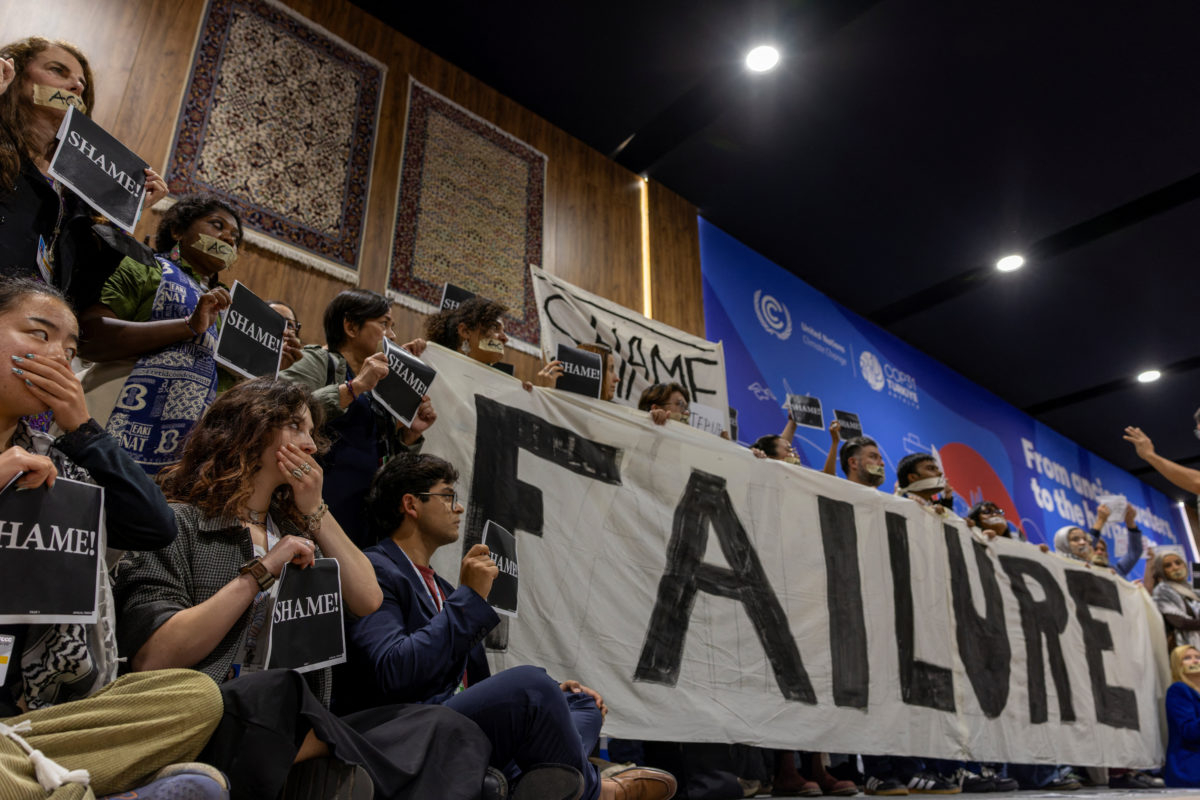
在深夜的会议期间,与会代表举起了写有“失败”字样的抗议横幅,还有一名示威者在库鲁姆发言时打断他,高喊:“你们正在扼杀未来,你们正在扼杀未来。”“没错,我们很疲惫,也付出了巨大努力——但就在这个大厅里,我们依然有能力向世界传递真正有意义的信息,”库鲁姆在周五晚上恳求道。“只要达成共识,我们就能带来真正的改变。”
在旨在确定世界应如何应对气候变化的最终协议草案中,甚至没有提及“化石燃料”一词,这一情况在周五引发了活动人士和各国领导人的强烈不满。
这类协议通常由近200个国家在几乎全票同意的基础上通过,属于自愿性质且不具备约束力。燃烧化石燃料——煤炭、石油和天然气——是导致气候变化的主要原因。
欧洲智库E3G的长期分析师阿尔登·迈耶表示,在三年前之前,25多年来最终决议中也从未提及化石燃料,主要原因在于沙特阿拉伯的反对。然而在2023年的迪拜会议上,世界各国同意“逐步摆脱对化石燃料的依赖”。“如果我们离开这里时仍无法表明我们真的致力于履行三年前所达成的承诺,那将是一个巨大的挫折,”迈耶说道。
库鲁姆承诺,经过通宵谈判后,最终文件的第三版将于周六上午交付。迈耶指出,各国之间存在分歧的未解决问题包括有关化石燃料的表述、针对工业领域的碳捕获与储存的具体要求、为贫困国家提供应对气候变化的财政援助,以及欧洲对高碳产品的伪关税。
“除非明天情况有所改变,否则我们将会面临非常令人失望的结果,”迈耶在周五晚上表示。
今年的谈判是在一系列紧急警告之下进行的,这些警告指出,地球气温上升的速度势必会超出2015年《巴黎协定》设定的目标,即将长期气温上升幅度控制在比工业化前水平高1.5摄氏度(2.7华氏度)以内。根据伯克利地球组织的数据,2026年10月的地球气温已比19世纪中叶高出1.8摄氏度(3.4华氏度)。在经历了一年多的与气候相关的灾难之后,包括欧洲的致命热浪和尼泊尔的严重洪水,这一情况再度出现。
“目前没有任何方案能够保护人们,或解决全球南方国家的迫切需求,”国际气候行动网络执行主任塔斯尼姆·埃索普在周五的一场活动中说道。与会者高呼口号,并举着写有“耻辱!”的标语。
随着气候谈判即将结束,关于化石燃料的争论仍在激烈进行。
会议拟定的主要目标之一是,到2035年将全球能源总消耗中电力的占比从目前的约21%提高到35%。
但最新的草案并未规定电力必须由太阳能和风能等可再生能源产生,这为将化石燃料发电厂纳入电气化推进计划留下了可能性。
阅读更多:在联合国气候谈判中,5个国家支持到2030年将屋顶太阳能板数量翻倍的计划“在气候危机亟需采取果断行动的当下,削弱淘汰化石燃料的承诺可能会阻碍进展,”绿色和平组织中东和北非地区执行主任吉瓦·纳卡特表示。
联合国已举办气候谈判30多年,但直到2021年在苏格兰格拉斯哥举行的峰会上才承认化石燃料是导致气候变化的原因。两年后,在阿拉伯联合酋长国迪拜,各国首次明确呼吁逐步摆脱对化石燃料的依赖。
土耳其的库鲁姆表示,推动电气化意味着要逐步远离化石燃料,并补充说:“我们并非来讨论以往气候大会上的决策的。”
巴拿马罕见地表示,如果最终协议未能满足增加气候融资、限制石油产量以及承认未达成的目标等要求,它将“正式提出反对”。该国环境部长胡安·卡洛斯·纳瓦罗表示,这些谈判被“石油黑手党”所控制,需要进行改革。纳瓦罗在周五晚上提醒库鲁姆,不能像往年那样,在不给予各国反对机会的情况下强行通过任何最终决定。
“这些气候大会已经变成了虚伪与徒劳的表演,”他说。“这里演变成了一场看谁说话最多、谁吹嘘最厉害的竞赛。”
脆弱国家称气候融资不足
协议草案还提出,用于补偿受气候变化影响国家的资金应增加两倍,但未具体说明金额。之前的草案版本称,每年至少需要1200亿美元,以帮助那些虽对气候问题贡献甚微,却承受着最严重气候灾害冲击的贫困脆弱国家。这笔资金本应来自那些对气候变化负有最大责任的富裕国家。但这些国家甚至没有提供此前商定的资金。
让这一目标更加复杂的是,世界上许多污染最严重的国家并未直接参与今年的谈判,其中包括美国——它是仅次于中国的第二大污染国,也是历史上最大的碳排放国。
“失望情绪普遍存在,”在土耳其担任非洲谈判代表顾问的伊斯坎德尔·埃尔齐尼·韦尔诺伊特说道。明年的气候峰会定于2027年11月在埃塞俄比亚首都亚的斯亚贝巴举行。
“希望并未破灭,但如果不进行方向调整,COP31的成果很可能会显得目标过低,”他说道。
德尔加多从曼谷报道,阿拉苏从印度班加罗尔报道,米尔科从巴基斯坦伊斯兰堡报道。美联社记者塞思·博伦斯坦和塔米·韦伯则从马里兰州肯辛顿和密歇根州芬顿为这篇报道提供了素材。
原文
ANTALYA, Turkey (AP) — United Nations climate talks in Turkey stretched into overtime Friday and delegates put off some decisions to next year, unable to find common ground on multiple issues with mutterings and protests about failure. Still, organizers remained hopeful that they could find ways the world can work together to avert the most catastrophic effects of global warming.
READ MORE: UN chief says 'immediate and drastic' emissions cuts needed to avert climate change catastrophe
"We are close to the finish line but not there yet," said Turkish Environment Minister Murat Kurum, president of the two-week summit known as COP31.
During a late-night session, delegates passed a protest banner reading "failure," while a demonstrator interrupted Kurum as he spoke, shouting, "you are killing the future, you are killing the future."
"Yes, we are tired, and we have put in a great deal of effort—but we still have the capacity, right here in this hall, to convey truly meaningful messages to the world," Kurum pleaded Friday night. "By reaching a consensus, we can effect real change."
The term "fossil fuels" wasn't even mentioned in the latest draft of the final agreement — meant to address how the world will deal with climate change — sending activists and country leaders into an uproar Friday.
Such agreements, often adopted by nearly 200 nations and only on a near-unanimous consensus basis, are voluntary and nonbinding. Burning fossil fuels — coal, oil and natural gas — is the chief cause of climate change.
Fossil fuels also went unmentioned in final decisions for more than 25 years until three years ago, mostly because of objections by Saudi Arabia, said Alden Meyer, a longtime analyst with the European think-tank E3G. In Dubai in 2023, however, the world agreed to "transition away from fossil fuels."
"It would be a real setback if we come out of here with no signal that we were serious about what we agreed to do three years ago," Meyer said.
Kurum promised that a third version of the final document will be delivered Saturday morning after overnight talks. Outstanding issues dividing nations include fossil fuel language, detailed calls for carbon capture and storage for industry, financial aid for poor countries to adapt to climate change and Europe's pseudo-tariff on carbon-intensive products, Meyer said.
"Unless things change by tomorrow, we are heading for a very disappointing outcome," Meyer said Friday night.
This year's talks came amid urgent warnings that the planet is sure to breach the goal set in the 2015 Paris Agreement of limiting long-term warming to 1.5 degrees Celsius (2.7 degrees Fahrenheit) above pre-industrial temperatures. October 2026 was 1.8 degrees Celsius (3.4 degrees Fahrenheit) warmer than the mid 1800s, according to Berkeley Earth.
It also came after a year of climate-related disasters, including Europe's deadly heat waves and Nepal's devastating flooding.
"There is nothing on the table that protects people, or addresses the priorities of the Global South," said Tasneem Essop, executive director of Climate Action Network International, at a Friday event, where attendees chanted and held signs that read "SHAME!"
As climate talks near their end, fossil fuel debate rages
One of the main goals on the table would increase the share of electricity in total global energy consumption from roughly 21% today to 35% by 2035.
But the latest draft doesn't stipulate that electricity should be generated with renewable energy sources like solar and wind, leaving the door open for fossil-fueled power plants to be counted as part of an electrification push.
READ MORE: At UN climate talks, 5 nations back plan to double rooftop solar panels by 2030
"At a time when the climate crisis demands decisive action, weakening commitments on fossil fuel phase-out risks undermining progress," said Ghiwa Nakat, executive director of Greenpeace in the Middle East and North Africa.
The U.N. has hosted climate talks for more than 30 years, but didn't acknowledge that fossil fuels contribute to climate change until the 2021 summit in Glasgow, Scotland. Two years later in Dubai, United Arab Emirates, countries explicitly called for a transition away from fossil fuels for the first time.
Turkey's Kurum said the electrification push implies a transition away from fossil fuels, adding: "We are not here to discuss decisions at previous COPs."
In a rare move, Panama vowed to "formally object" if the final agreement doesn't add climate finance, cap oil production and acknowledge failing goals, among other demands.
The country's Environment Minister Juan Carlos Navarro said the talks are being held hostage by a "petroleum mafia" and need to be reformed. Navarro reminded Kurum Friday night that he can't ram through any final decision without allowing countries to object, as has been done in previous years.
"The COPs have become an exercise in hypocrisy and futility," he said. "What we have here is a contest to see who speaks the most, who blows the most hot air."
Vulnerable nations say climate finance is lacking
The draft agreement also says a fund to compensate countries ravaged by climate change should be tripled but doesn't specify an amount. A previous version of the draft said at least $120 billion would be needed annually to help the mostly poorer, vulnerable nations that are bearing the brunt of climate disasters despite contributing little to the problem.
The money is supposed to come from wealthier nations that have contributed most to climate change. But rich countries are not even providing previously agreed upon funds.
Complicating the goal is that many of the world's most polluting nations did not participate directly at this year's talks, including the United States, the second-biggest polluter behind China and the largest historical emitter.
"Disappointment is rife," said Iskander Erzini Vernoit, an adviser to African negotiators in Turkey. Next year's climate summit is scheduled to take place in Ethiopia's capital, Addis Ababa, in November 2027.
"Hope is not lost, but absent a course correction, we are headed toward a low-ambition set of outcomes at COP31," he said.
Delgado reported from Bangkok, Arasu from Bengaluru, India, and Milko from Islamabad, Pakistan. Associated Press writers Seth Borenstein and Tammy Webber contributed to this report from Kensington, Maryland and Fenton, Michigan.