国际政治
国际法院裁定缅甸对罗兴亚人犯下种族灭绝罪,人权组织呼吁实施制裁。
中文译文
联合国(美联社)——在联合国最高法院首次作出此类裁决,认定缅甸政府在2017年的残酷军事行动中对罗兴亚少数民族实施了种族灭绝行为后,人权组织呼吁对缅甸实施军事和经济制裁。
观看:国际法院裁定缅甸对罗兴亚人实施种族灭绝罪
国际法院无权强制执行周四的裁决,该裁决要求缅甸由军方支持的政府允许那些因暴力而逃离的人安全返回家园,向罗兴亚穆斯林支付赔偿,并起诉那些涉嫌实施种族灭绝的人。缅甸政府否认犯下种族灭绝罪,称其行动是针对叛乱分子,而且似乎不太可能满足法院的任何要求。前军事领导人敏昂莱总统负责2017年的军事行动。法院称有证据表明缅甸军队杀害了约10万名罗兴亚人。
总统发言人Khine Khine Soe指出,国际法院周四作出的裁决是法官们以9票赞成、6票反对的结果。
她在首都内比都对记者表示:“并非所有15名法官都同意这一裁决。因此这不是一个一致通过的决定。我认为这是不公平的。”
虽然国际法院的裁决具有最终效力且具有法律约束力,但它除了向联合国安理会报告违规行为外,别无其他手段。
联合国安理会有权实施制裁。应英国的请求,安全理事会定于下周三就该裁决举行闭门磋商,并在12月7日召开非公开会议。英国在周四的裁决出台后已驱逐了缅甸的国防武官。
不过,国际危机组织负责联合国事务的丹尼尔·福尔蒂表示,由15个成员国组成的安全理事会不太可能立即采取行动,尽管该理事会有权对缅甸实施制裁。他认为,任何行动都可能会遭到拥有否决权的常任理事国中国和俄罗斯的阻挠。
福尔蒂对美联社表示:“自2021年以来,中国就一直劝阻安全理事会对缅甸问题采取行动,因为它不愿在自己的‘后院’丧失任何影响力。国际法院的裁决不会改变中国的考量,很难想象北京或莫斯科会支持任何试图落实法院建议的安全理事会决议。”阅读更多:缅甸是首个被认定对种族灭绝负有责任的国家。国际法院在其他案件中是如何裁定的?
福尔蒂表示,发起诉讼的冈比亚最终可能会在由193个成员国组成的联合国大会上寻求一项决议,要求缅甸遵守国际法院的裁决,尽管与安理会的决议不同,这类决议并不具有法律约束力。
大会主席卡利卢尔·拉赫曼计划就国际法院的裁决与联合国193个成员国举行“非正式对话”,并且愿意进行其他形式的交流,大会发言人梅利莎·萨默斯说道。她表示,同时担任孟加拉国外交部长的拉赫曼于周五前往科克斯巴扎尔,对聚集在那里的罗兴亚人说“在这样一个历史性时刻”必须采取行动,并承诺在纽约为他们发声。“为所有人争取正义”是一家致力于维护穆斯林少数群体权益的美国人权组织,该组织呼吁特朗普政府支持联合国大会通过决议,要求缅甸遵守相关判决,并建立国际监督与跟进机制。
人权组织呼吁针对缅甸的经济和军事领域采取行动
“为所有人争取正义”拥有一个由38家美国和加拿大穆斯林组织组成的特别工作组,自2017年以来一直为罗兴亚人的权益发声。该组织认为,制裁应针对缅甸的石油和天然气行业,以及为缅甸军队提供武器和其他支持的网络。
国际特赦组织秘书长阿格尼斯·卡拉马德敦促各国政府不要在国际舞台上欢迎这位总统,尤其是在缅甸境内严重侵犯人权的行为仍在持续且未受遏制的情况下。“相反,他们应该停止向缅甸输送所有武器、安保及监控设备,以及军事和安保援助,”她说。“联合国安理会应实施全球武器禁运,并将缅甸的整个局势提交给国际刑事法院。”
然而,该法院及其许多法官和工作人员都处于美国的制裁之下,因此安理会的任何行动几乎肯定会遭到美国的否决。
2024年底,国际刑事法院的检察官以明昂莱犯有针对罗兴亚人的反人类罪为由,申请对其发出逮捕令。目前尚未有关于负责签发该逮捕令的法院法官们作出何种决定的公开消息。法院检察官办公室在回复美联社的邮件中表示,国际法院的判决“不会对目前国际刑事法院法官正在审理的案件产生任何影响”,并指出国际刑事法院处理的是个人刑事责任的指控,而非国家责任。
罗兴亚人获得赔偿的道路尚不明朗
人权观察组织呼吁各国政府挺身而出帮助罗兴亚人。
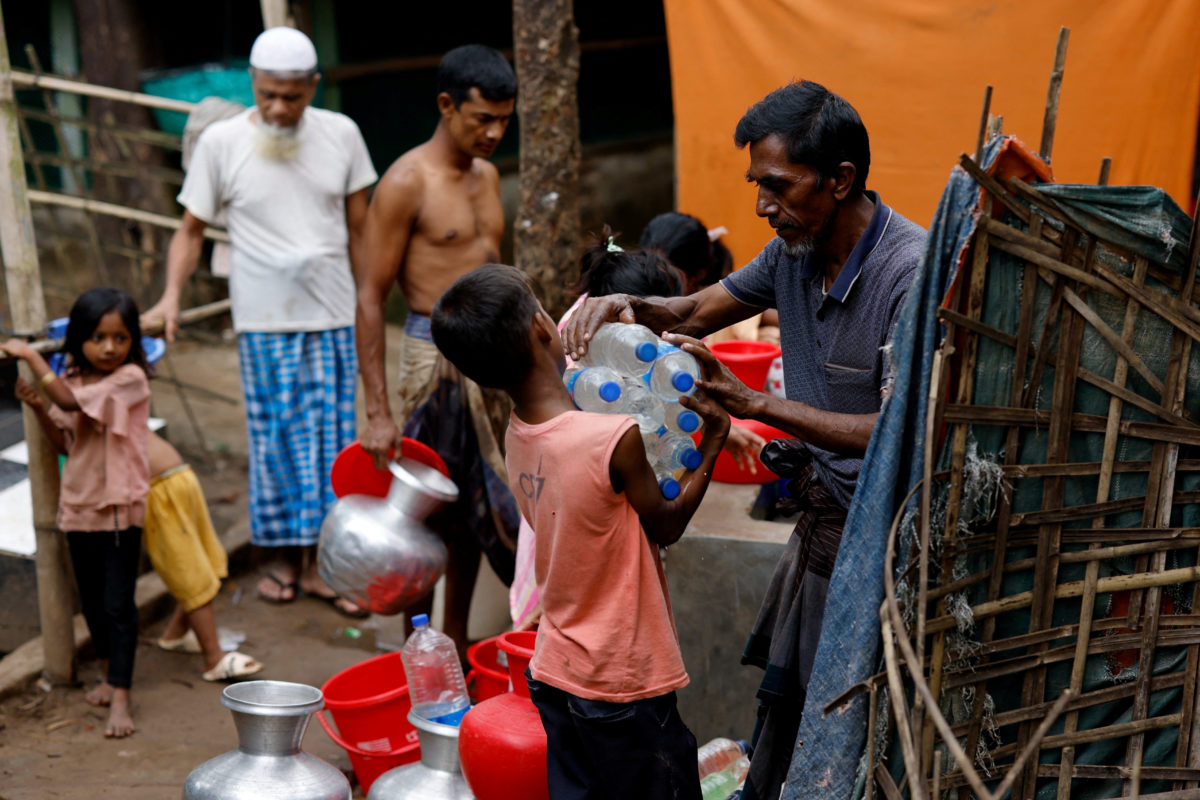
该组织的高级国际司法顾问玛丽亚·埃莱娜·维尼奥利在一份声明中表示:“有关国家应大力支持罗兴亚人,为这些暴行伸张正义,迫使缅甸军政府遵守判决,并确保罗兴亚难民能够安全、自愿地返回缅甸。”“为所有人伸张正义”组织呼吁全球支持为罗兴亚人设立赔偿基金,并采取措施改善他们的教育状况、提供保护、帮助他们获得公民身份,以及让他们能够安全地从孟加拉国自愿返回。目前约有120万罗兴亚人生活在孟加拉国拥挤不堪的难民营中。
缅甸以佛教为主,长期以来一直声称罗兴亚人是来自孟加拉国的“孟加拉移民”,尽管他们的家族已在该国生活数代。自1982年以来,几乎所有罗兴亚人都被剥夺了公民身份,实际上成了无国籍人士,同时他们还被剥夺了行动自由和其他基本权利。
在荷兰海牙听取法庭判决的罗兴亚人权活动家雅斯明·乌拉表示,这一判决“只有各国政府采取行动才能发挥作用”。
“因此,我呼吁所有联合国成员国采取有力措施落实国际法院的判决,”她说,并建议首先对相关总统实施制裁。“要让缅甸为其破坏的一切向民众作出赔偿,”她说。“还我们生活,给我们一个未来。我们希望成为一个稳定、繁荣且充满活力的缅甸的一部分。”
美联社驻荷兰海牙的记者迈克·科德参与了报道。
原文
UNITED NATIONS (AP) — Rights groups are calling for military and economic sanctions against Myanmar after the United Nations' highest court, in the first ruling of its kind, determined that its government committed genocide against the Rohingya minority in a brutal 2017 military operation.
WATCH: International Court of Justice finds Myanmar guilty of genocide against Rohingya
The International Court of Justice has no power to enforce Thursday's ruling, which orders Myanmar's military-supported government to allow those who fled the violence to return home safely, to pay reparations to the Rohingya Muslims and prosecute those suspected of having committed genocide.
Myanmar's government has denied committing genocide, claiming it acted against insurgents, and is considered unlikely to fulfill any of the court's demands. President Min Aung Hlaing, the former military leader, was in charge of the 2017 operation. The court said evidence showed Myanmar forces killed about 100,000 Rohingya.
Khine Khine Soe, the president's spokeswoman, noted the International Court of Justice decision handed down Thursday had been the result of a nine-to-six vote of the judges.
"Not all 15 judges agreed with the decision," she told reporters in the capital Naypyitaw. "So it was not a decision made unanimously. I would say that it was unfair."
While the World Court's rulings are final and legally binding, it has no recourse beyond reporting noncompliance to the U.N. Security Council.
UN Security Council has the power to impose sanctions
The Security Council scheduled closed consultations on the ruling next Wednesday and a private meeting on Dec. 7 at the request of the United Kingdom, which expelled Myanmar's defense attache after Thursday's ruling.
But Daniel Forti, the International Crisis Group's head of U.N. affairs, said it's unlikely there will be any immediate action from the 15-member Security Council, which could impose sanctions on Myanmar. He said any action would likely be blocked by China and Russia, both permanent members with veto power.
"China has discouraged the Security Council from acting on the Myanmar file since 2021, as it is reluctant to cede any influence in its own backyard," Forti told The Associated Press. "The ICJ ruling will not alter China's calculations, and it is hard to imagine that either Beijing or Moscow would support any potential Security Council resolution that attempts to enforce the court's recommendations."
READ MORE: Myanmar is the first state found responsible for genocide. Here's how the ICJ ruled in other cases
Forti said Gambia, which launched the court proceedings, may eventually pursue a resolution in the 193-member General Assembly calling on Myanmar to comply with the ICJ's demands, even though its actions are not legally binding, unlike those of the Security Council.
General Assembly President Khalilur Rahman plans to hold "an informal dialogue" with the U.N.'s 193 member nations on the ICJ ruling and remains open to other exchanges, assembly spokesperson Melissa Summers said. Rahman, who is also Bangladesh's foreign minister, went to Cox's Bazaar Friday and told a crowd of Rohingya "at this historic moment" that there must be action and pledged to be their voice in New York, she said.
Justice for All, an American human rights organization that advocates for the rights of Muslim minorities, called on the Trump administration to support a General Assembly resolution demanding Myanmar's compliance with the judgment, and establishing international monitoring and follow-up.
Rights groups call for targeting Myanmar's economy and military
Justice for All, which has a task force of 38 U.S. and Canadian Muslim organizations that have advocated for Rohingya rights since 2017, argued that sanctions should target Myanmar's oil and gas sector and the networks that provide weapons and other support to its military.
Amnesty International's Secretary General Agnes Callamard urged governments not to welcome the president "on the international stage, especially as grave violations continue unchecked inside Myanmar."
"Instead, they should stop any transfer of all weapons, security and surveillance equipment, and military and security assistance to Myanmar," she said. "The U.N. Security Council should impose a global arms embargo and refer the entire situation in Myanmar to the International Criminal Court."
That court, however, is under U.S. sanctions along with many of its judges and staff, so any action by the Security Council would face an almost certain U.S. veto.
Prosecutors at the ICC requested an arrest warrant for Min Aung Hlaing in late 2024 alleging he was responsible for crimes against humanity against the Rohingya. There has been no public announcement on a decision by judges at the court who would have to issue a warrant.
The court's Office of the Prosecutor said in an email response to questions from The Associated Press that the ICJ judgment "will not have any bearing on matters that are currently before the Judges of the ICC," and noted that the ICC deals with allegations of individual criminal responsibility of people, as opposed to state responsibility.
No clear path for reparations for the Rohingya
Human Rights Watch urged governments to step forward to help the Rohingya.
"Concerned governments should strongly support the Rohingya and promote justice for atrocities, press Myanmar's junta to comply with the judgment, and ensure the safe and voluntary return of Rohingya refugees to Myanmar," Maria Elena Vignoli, the group's senior international justice counsel, said in a statement.
Justice for All called for global support for a Rohingya reparations fund and measures to advance their education, protection, pursuit of citizenship and safe voluntary return from Bangladesh, where some 1.2 million Rohingya now live in overcrowded camps.
Myanmar, which is majority Buddhist, has long claimed the Rohingya are "Bengali" migrants from Bangladesh, even though their families have lived in the country for generations. Nearly all Rohingya have been denied citizenship since 1982, effectively rendering them stateless, and they are denied freedom of movement and other basic rights.
Yasmin Ullah, a Rohingya rights activist who listened to the court ruling in The Hague, Netherlands, said the judgment "will only mean something if governments act on it."
"So, I say to every U.N. member state, take robust steps to implement the ICJ judgment," she said, starting with sanctions against the president.
"Make Myanmar pay reparations to the people it destroyed," she said. "Give us back our lives. Give us a future. We want to be part of a stable, prosperous and thriving Myanmar."
Associated Press writer Mike Corder in The Hague, Netherlands, contributed.